
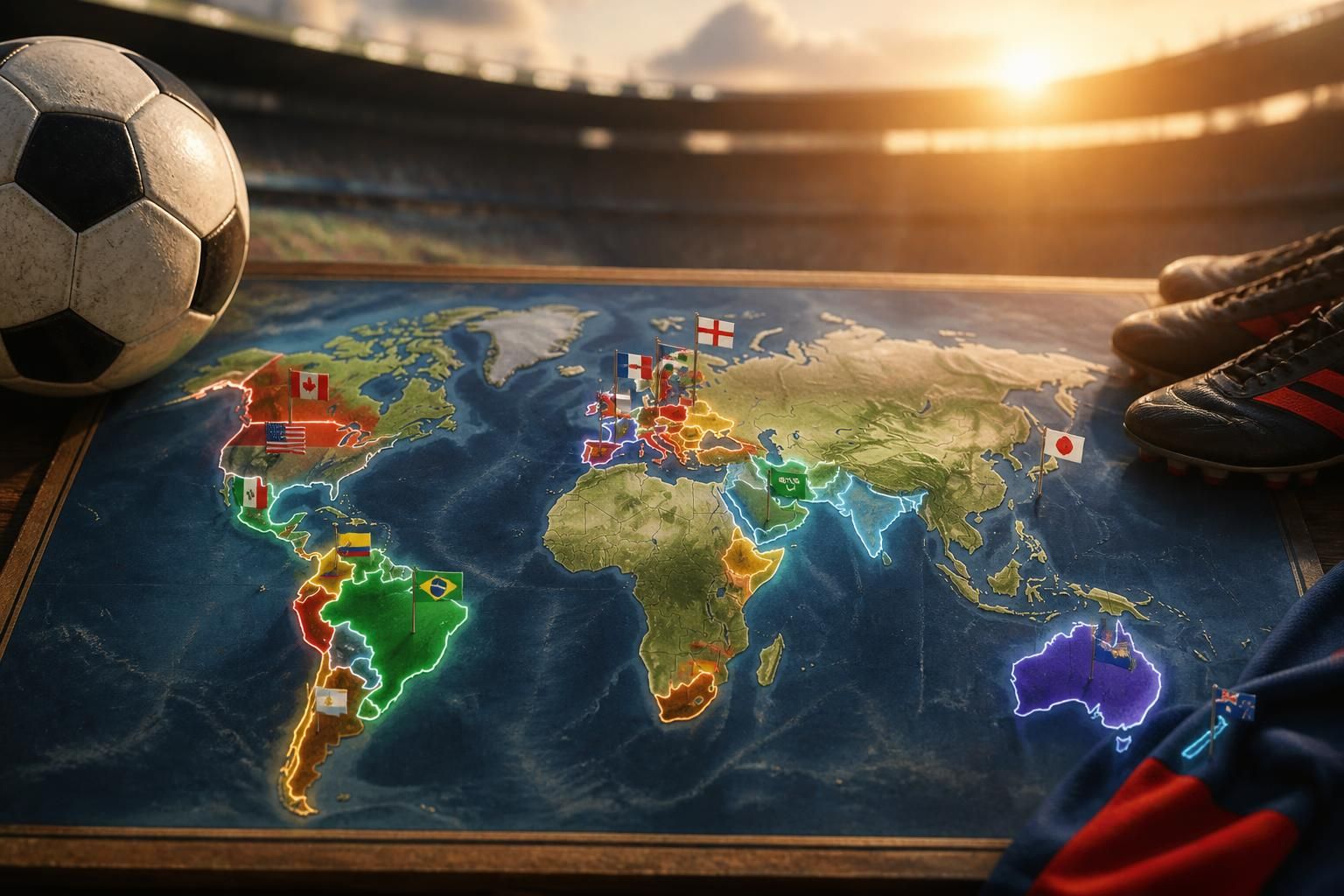
With the 2026 FIFA World Cup set to be the most expansive and ambitious tournament yet, the quest for qualification has been nothing short of electrifying. The first-ever 48-team World Cup, co-hosted by the United States, Canada, and Mexico, marks a historic leap from previous editions. After rigorous soccer qualifiers across continents, 42 teams have already secured their spots, with just six places left to be claimed. The global stage is shaping up to showcase a more diverse array of football teams than ever before, heightening anticipation and debate around the competition’s format changes and logistical groundwork.
From Europe’s powerhouse nations clinching their positions to rising talents lighting up Asian and African qualifiers, the tournament’s complexion is evolving rapidly. While some traditional heavyweights like England, Germany, and Argentina have cruised through qualification, lesser-known squads are carving out their place, fueled by the expanded slots. Yet, the shadow of unresolved spots looms, promising March’s playoff battles to serve as a thrilling prelude. Logistical developments in host cities promise state-of-the-art stadiums and infrastructure, though questions remain about the tournament’s management over three countries. As we track the latest World Cup news and qualification updates, one thing is clear: this edition will test the limits of global football organization and passion.
Who Are the World Cup Qualified Teams Across the Continents? 🌍
The distribution of qualified countries underscores the FIFA effort to broaden representation. Asia has booked its share with eight direct qualifiers including South Korea, Japan, and Australia, showcasing the region’s growing competitiveness. Iraq narrowly missed direct entry but earned a lifeline into the intercontinental playoff after a hard-fought victory over the UAE.
Africa, traditional breeding ground of football brilliance, has already seen nine teams qualify such as Egypt, Morocco, and Senegal, with DR Congo winning a tense playoff for a chance to claim an intercontinental spot. The African qualifiers, filled with dramatic penalty shootouts and last-minute goals, are a testament to the continent’s relentless spirit and unpredictability.
CONCACAF stands out not only as the home confederation of the three hosts but as a region delivering qualifiers like Panama and Haiti, who topped their groups against the odds. The presence of Canada, Mexico, and the USA as automatic qualifiers exemplifies a unique hosting model. Meanwhile, Jamaica and Suriname keep hopes alive in the intercontinental playoffs, emphasizing the growing soccer footprint in North and Central America.
The fierce South American qualifiers played out in a marathon 18-match round robin, where giants Argentina and Brazil easily booked their places among the six automatic qualifiers. Bolivia, finishing seventh, has a shot through the playoffs, reminding everyone that even established footballing regions see surprises.
Oceania made history by guaranteeing a representative team for the first time. New Zealand triumphed in their federation tournament, while New Caledonia secured a place in the intercontinental playoff. This breakthrough adds a fresh dynamic, elevating the global reach of soccer competition.
Europe, commanding the largest allotment with 16 direct qualifiers plus playoff contenders, delivered a lineup of powerhouses like England, France, Germany, and Spain securing top spots. The playoff system that will send four more teams forward in March promises a high-stakes drama encapsulating the fierce competition within UEFA.
Hosting Ambitions and Logistical Challenges of the 2026 FIFA World Cup 🏟️
The United States, Canada, and Mexico’s joint hosting efforts aim to revolutionize how a World Cup operates. Across North America, infrastructure investments are at record levels: stadium upgrades in Monterrey and new constructions in cities like Toronto and Los Angeles are reshaping the soccer landscape. Fans can expect world-class facilities blending modern tech and local culture.
However, the scale and tri-national setup raise legitimate concerns about scheduling, travel, and fan experience. The expanded 48-team format, while exciting, complicates these logistics further, pushing FIFA and host cities to coordinate with unprecedented precision. The three-host model’s success will inevitably influence future tournaments, but it remains to be seen if the operational challenges can be fully mastered.
Favorite Teams and Notable Bids—Who to Watch? ⚽
Traditional heavyweights remain favorites to clinch the trophy—Argentina’s lionized squad, Brazil’s flair, and Germany’s efficiency continue to dominate predictions. England and France bring youth and tactical depth, sharpening their hopes to finally break through. Meanwhile, fans are watching underdog stories like Scotland’s rise, inspired by gritty qualifiers against Denmark and others, reinforcing that surprises may come from unexpected quarters.
Teams like Portugal are rebuilding with exciting new talent, as covered extensively in analyses on Portugal’s 2026 World Cup journey. North American hosts also carry the dual pressure of performing on home turf and advancing in a globally stacked tournament.
Playoffs and Final Qualification Hurdles: The Road to the Last Six Spots 🔥
With 42 teams already confirmed, the tension shifts to the 22 teams scrambling in the intercontinental playoffs set for March. This phase, including matchups like Iraq vs UAE and DR Congo against other hopefuls, serves as a final battleground where dreams can either be made or shattered. The two remaining spots to be decided could include teams from Asia, Africa, and the Americas, making the playoff window one to watch closely.
The UEFA playoff showdown is equally dramatic, pitting second-place finishers and Europa League performers against each other for the last four European tickets. This intricate qualification web underscores the intensity and depth of talent battling for World Cup glory.
As we continue to follow the latest World Cup updates and uncover stories of resilience, ambition, and heartbreak, one thing stands out: the 2026 FIFA World Cup is not just an event but a revolution in global football. The qualified teams reflect changing tides, the hosts’ preparations signal a new era, and the upcoming playoffs promise drama worthy of the grand stage.
For football fans eager to dive deeper into matchmaking and predictions, the ongoing developments around qualifiers and host cities offer endless analysis, such as detailed previews on Canada’s preparations and prospects or strategic World Cup 2026 winner predictions.