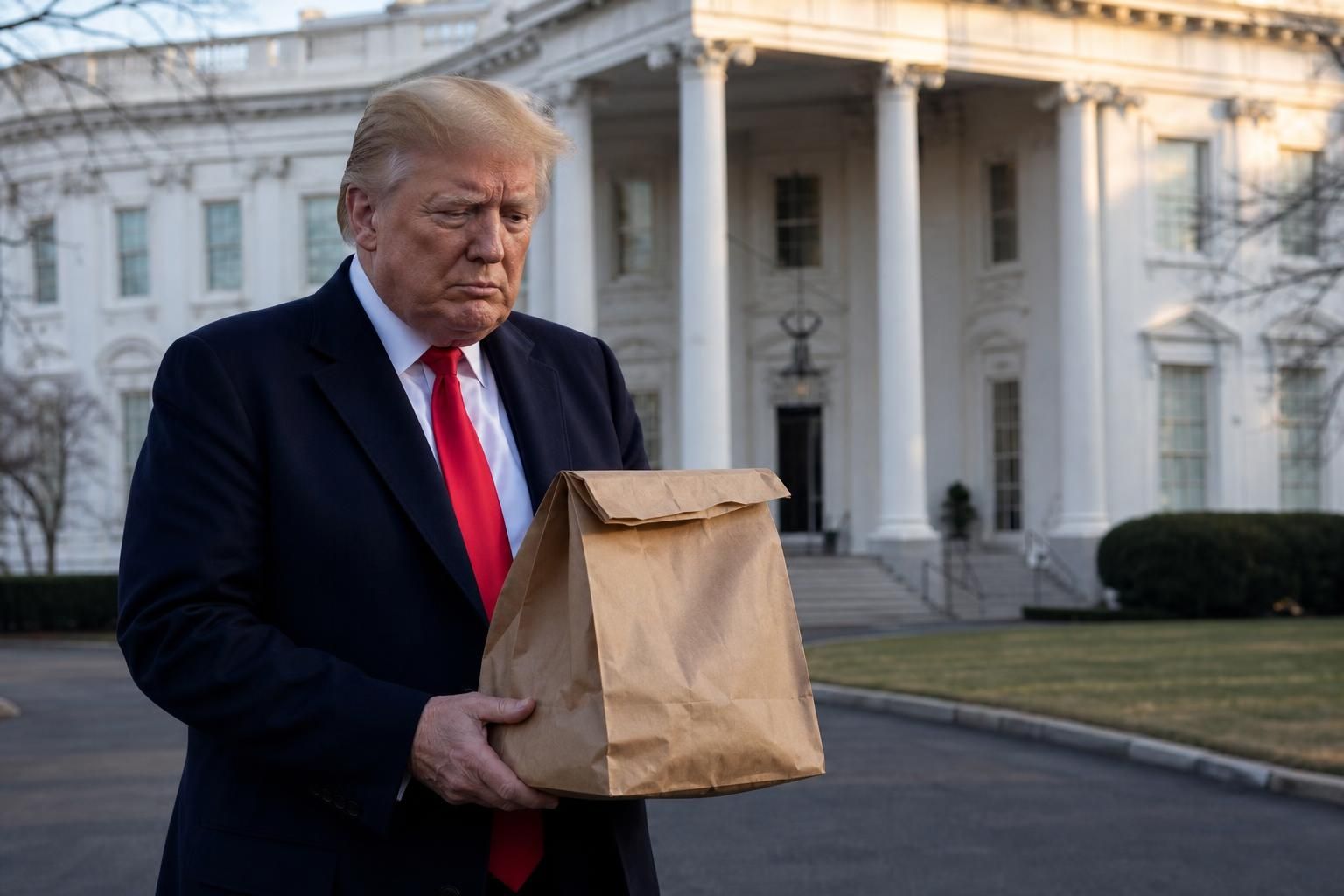
Donald Trump’s McDonald’s DoorDash delivery to the White House sparked a wave of controversy in 2026, blending fast food with politics in a way that left many scratching their heads. The stunt was meant to champion his policy eliminating taxes on tips, but quickly backfired amid widespread criticism of its poor taste and awkward execution. Trump’s own admission that the move was “a little tacky” only added fuel to the fire, making the episode a highlight of political faux pas in recent memory. It wasn’t just about delivering burgers and fries—it was about perception, public image, and political theater gone wrong.
This episode unfolded as President Trump engaged DoorDash’s “grandma” delivery driver, Sharon Simmons, who brought two full bags of McDonald’s meals straight to the Oval Office. The spectacle, captured on camera, aimed to humanize the administration’s intent, but stumbled amid a chaotic follow-up press conference. Trump’s heavy-handed questioning of Simmons on policy gains, combined with an uncomfortable exchange about social topics like transgender participation in sports, turned the moment into a cringe-worthy fiasco that echoed loudly online and in political circles alike.
Trump’s McDonald’s Delivery to the White House: An Unapologetically Awkward Political Move
The McDonald’s delivery to the White House was supposed to be a slick visual metaphor for Trump’s tax reform—specifically the removal of taxes on tips—aimed at garnering voter support. Instead, it turned into a glaring example of the dangers in mixing fast food imagery with serious political messaging. The president’s insistence on emphasizing that the delivery driver had earned $11,000 more under his law felt forced and out of place, showcasing a gimmicky approach that peeled away any genuine connection with the audience.
Behind the scenes, Trump later confessed at a Las Vegas roundtable that the staged delivery was “a bit in poor taste” and attributed the idea to his team’s “wild ideas.” This rare moment of candidness highlighted how political stunts, while potentially effective in energizing a base, often risk alienating a wider public by looking contrived and insincere.
This crafted PR moment quickly morphed into a “viral disaster,” as social media erupted with parodies and criticism. The image of the “DoorDash Grandma” in her branded shirt amid the grandeur of the Oval Office became a symbolic mismatch that underscored Trump’s polarizing style.
Public Perception and the Politics of Poor Taste in 2026
The principal takeaway from this mishap is how public perception can swiftly turn an intended show of relatability into an embarrassing misstep. Trump’s approach to politics has frequently leaned on ostentation and spectacle, but this time, even his own admission pointed to crossing a line.
During the press conference, the tension peaked when Trump inappropriately pressed Simmons about divisive issues, revealing a tone-deaf attempt to blend social commentary into a fast-food promotional event. The driver’s polite but evasive responses only amplified the discomfort, exposing the thin line politicians walk when staging “spontaneous” moments for public consumption.
The incident also reflects the intensifying scrutiny political figures face in a hyper-connected 2026 media landscape. Voters are quick to spot and call out anything that feels inauthentic or exploitative, raising the stakes for future campaigns that lean heavily on gimmicks.
Still, Trump defended such stunts as necessary, saying that while they might be “a little bit embarrassing,” they help secure “landslide victories.” Whether these awkward moments will translate to electoral success remains an open question, especially given the mounting challenges facing the Republican Party in upcoming midterms.