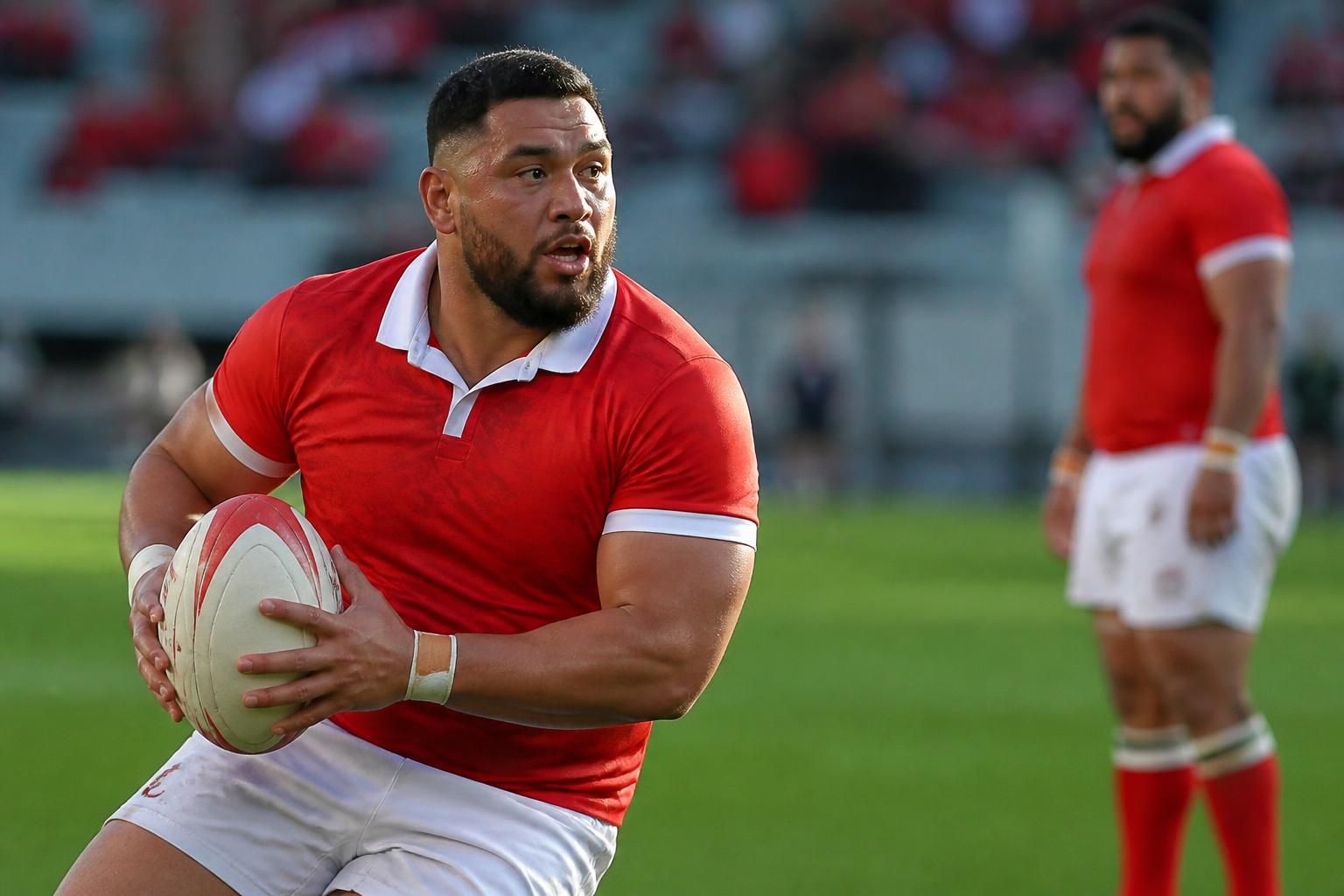
The Tonga Rugby Team is gearing up for a challenging summer as they prepare to compete in the second division of the Nations Championship. This year’s selection has raised eyebrows, notably with the inclusion of Adam Coleman, the Australian-born lock fresh off a Top 14 European championship triumph with Bordeaux Bègles, while the renowned prop Ben Tameifuna has been surprisingly omitted from the squad for the time being.
The Ikale Tahi are set to face Zimbabwe, Spain, and Portugal during the summer fixtures before heading into autumn clashes with Georgia, Romania, and Hong Kong. The squad features a mix of seasoned internationals like Pita Ahki, whose journey from New Zealand representative to Tonga international since the 2023 Rugby World Cup adds an intriguing dynamic to the side’s composition.
While the selectors obviously aimed to bring fresh energy and leverage Coleman’s European experience, leaving out Tameifuna—who boasts a reputation as a near-150kg powerhouse with exceptional agility for his size—poses questions about the strategic vision for Tonga’s forward pack. This decision underscores some of the tensions present in modern international rugby, especially for tier-two nations trying to balance heritage, form, and fitness.
Tonga Rugby Team’s Bold Selection: Adam Coleman Included Over Ben Tameifuna
The announcement of the Tonga squad for the upcoming Nations Championship has stirred some debate among rugby analysts and fans. Adam Coleman’s selection is undeniably a coup. With ties to Tonga through his family lineage—connected to former Tongan captains like Pau’u Lolohea-Afeaki and cousins with rugby legends—Coleman brings both pedigree and recent high-level competitive exposure to the team.
Conversely, the omission of Ben Tameifuna, a consistent force in the Top 14 and recent European champion with Bordeaux, is harder to justify outright. Known for defying the expected physical limitations due to his size, Tameifuna’s dynamism on the field would seemingly be pivotal in a grueling championship format. This absence could impact Tonga’s scrummaging power and set-piece stability, critical components against physically robust opponents like Georgia and Romania.
Analyzing the Strategic Implications of Player Selection on Tonga’s Forward Pack
Tonga’s choice reflects a potent mix of strategic selection and perhaps off-field considerations. Adam Coleman’s impact will be watched closely, expected to inject not only experience from European championship environments but also leadership within the second row. His presence signals a commitment to strengthening the line-out and open-field work rates, areas where Tonga historically look to leverage their natural athleticism.
Ben Tameifuna’s exclusion could indicate concerns around form, fitness, or off-field factors, although no official explanation has been provided. From a tactical perspective, Tonga will need to compensate for the absence of such a formidable pillar in the scrum by utilizing dynamic loose forwards and perhaps adjusting their forward rotation strategy to maintain intensity throughout matches.
Upcoming Nations Championship Fixtures and Their Impact on Tonga Rugby Squad Dynamics
The Nations Championship places the “Ikale Tahi” against teams like Zimbabwe, Spain, and Portugal this summer, and then Georgia, Romania, and Hong Kong in the autumn. Tonga’s path through these fixtures is a significant test of the team’s adaptability and depth. The inclusion of seasoned and new players alike, with Coleman leading the locks and Tameifuna’s absence felt in the front row, will see coaches tasked with maximizing the available talent across all facets of their game.
Such adversity often breeds bold tactical choices, forcing Tonga to emphasize speed, agility, and creative plays outside the scrum. Players such as Pita Ahki, who has experience adapting his game across hemispheres and international levels, will be crucial in guiding the backline and facilitating smooth transitions in play phases.
For anyone following the evolution of Pacific Island rugby, this selection and its resultant performances will be a fascinating study in balancing heritage with the competitive demands of international rugby. To deepen the understanding of team dynamics and evolving strategies, visit detailed insights at Rugby Paimpol Tradition Training and explore more on tactical evolutions in the front row at NAR Scrum Half Opportunity.