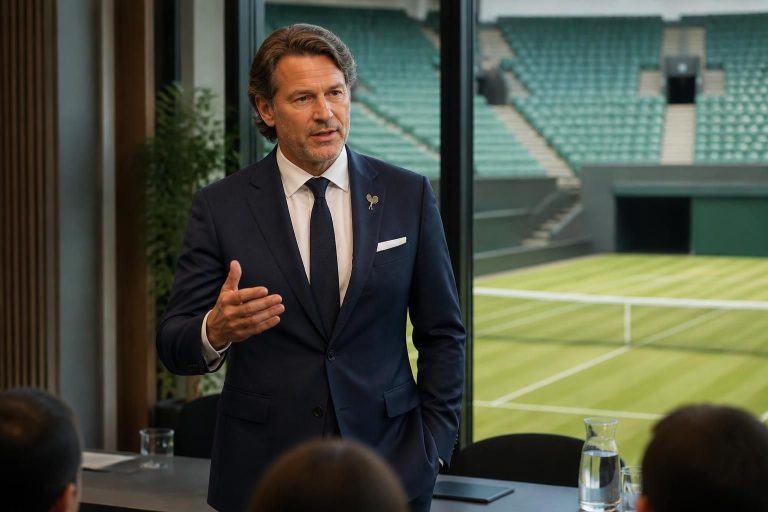

Tensions are escalating within the world of tennis as doubles specialists publicly express their strong objections to the recent proposals presented by the ATP. These proposed reforms, aiming to reshape the format and economics of doubles competition, have ignited a significant conflict among players and stakeholders, sparking intense debate over the future viability of professional doubles tennis. As the sport strives to maintain its global appeal and financial growth, the proposed changes threaten to marginalize a critical segment of the sport’s ecosystem.
Earlier this week, a group of veteran doubles players issued a sharply worded statement rejecting the ATP’s plans, which include reducing draw sizes by half—dropping Masters 1000 doubles teams from 32 to 16 pairs, and other tournaments from 16 to just 8 pairs. Moreover, prize money distributions would shift dramatically, curtailing doubles players’ earnings by cutting their share from 20% to 10% in tournaments more heavily favoring singles competition. In addition, entry into Challenger events would prioritize singles rankings over doubles rankings, sidelining specialized players further.
Disturbingly, this move has faced opposition from the doubles circuit itself, yet the ATP appears intent on pushing forward, despite notable resistance. The communiqué from the doubles community lamented that unlike the Grand Slam tournaments, where men’s doubles remain untouched and appreciated, the ATP seems determined to downscale what they describe as an indispensable facet of tennis. Doubles is not a mere sideshow; it’s a pillar of both professional excellence and grassroots tennis culture.
Inside the Growing Conflict Between Doubles Specialists and ATP Proposals
The proposals call for an overhaul of the doubles discipline that many perceive not as mere “adjustments” but as a potential death sentence for doubles as a professional pursuit. The cuts in draw sizes and prize money, combined with a reallocation of ranking priorities, suggest a vision where doubles is relegated to secondary status—something the community finds unacceptable. Notably, the group stressed the openness and transparency deficit with which these measures were introduced, citing almost no consultation with the players whose careers and livelihoods hang in the balance.
Bearing testimony to the depth of resistance, Belgium’s No. 1 doubles specialist Sander Gillé spoke candidly to Tennis Belgium, emphasizing that the doubles circuit is not a lower tier but a dedicated profession in its own right. “The sport has never been more successful or generating higher revenues,” he asserted, sharing the collective determination of doubles players to fight for the preservation of their discipline. Gillé and others are demanding that the ATP engage in meaningful dialogue rather than railroading these proposals.

The Broader Implications for Tennis as a Sport and Business
Beyond the immediate uproar, the implications for the tennis world at large could be profound. Doubles tennis represents not just an additional spectacle but a critical career avenue for many professional players who might not have the singles ranking or longevity to thrive on that circuit. Cutting opportunities risks shrinking the talent pool and weakening the sport’s infrastructure.
Interestingly, despite the ATP’s positioning, the four Grand Slam events have signaled intent to maintain the doubles competitions “as is,” isolating the ATP’s track from the sport’s most prestigious stages and underscoring a divide within tennis governance itself. This discord could affect fan engagement at a time when sports worldwide seek to broaden appeal amid evolving entertainment landscapes.
The controversy echoes some of the wider discussions seen in sports worldwide where economic considerations clash with tradition and athlete welfare. Recent tournament shifts and player withdrawals in big events—covered in pieces about top players’ comebacks and withdrawals—show how sensitive the ecosystem is. The fate of doubles experts may be a litmus test for how tennis balances modernization with preserving its core identity.
Doubles Specialists’ Rally to Preserve Their Place on the Tennis Stage
The sports community is watching closely as key players advocate not only for their careers but for the recognition of doubles as a sport demanding skill, strategy, and athleticism equivalent to singles. The outspoken critique that the ATP’s plan is little more than a cost-cutting exercise engenders sympathy, especially in light of doubles’ integral role in amateur and regional tennis circuits—an aspect too often overlooked in commercial decision-making.
Efforts to stage formal opposition are already underway. The upcoming tennis doubles reform discussions, potentially coinciding with major tournament forums like Wimbledon, could mark a turning point. Players seek to transform this conflict into constructive talks that might safeguard the doubles discipline while addressing the ATP’s financial concerns.
The conversation surrounding this conflict will undoubtedly resonate beyond the immediate tennis community, touching on wider sporting values of fairness, tradition, and athlete empowerment. One thing is clear: the doubles specialists refuse to watch quietly as their profession—one that has produced legendary Grand Slam champions and enchanted fans worldwide—is threatened by what they perceive as shortsighted reforms.