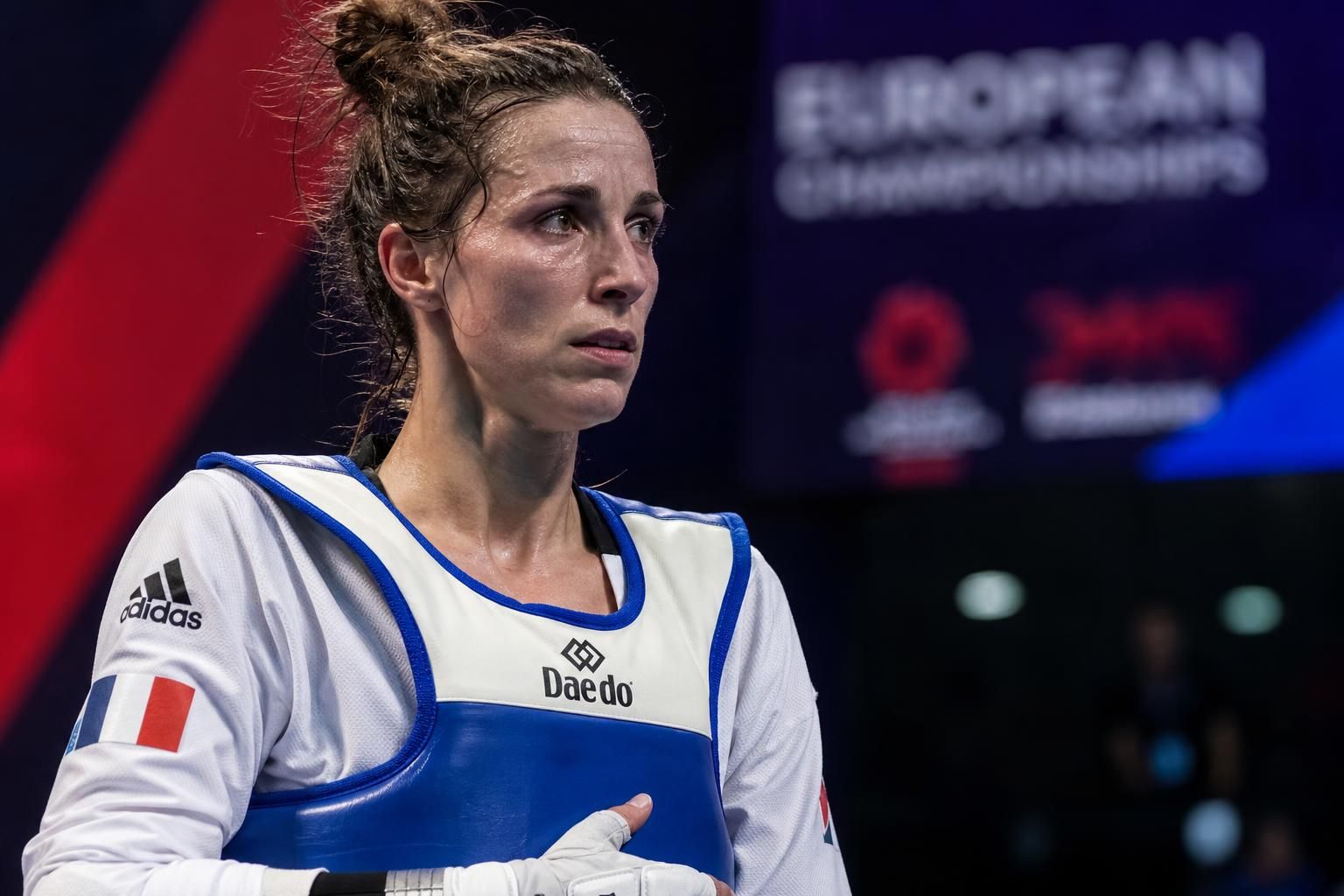
Magda Wiet-Hénin marked a powerful comeback during the Taekwondo Euro championship in Munich, proving her relentless commitment to the martial arts despite daunting physical challenges. Battling through a fractured hand and just over a year after a severe ligament injury, she secured a bronze medal in the under-73 kg category. This feat gains even more weight considering the weight class was not her usual domain and the personal loss she endured—a month prior, she lost her father, a notable MMA fighter. The athlete’s display of physical endurance and determination reflects not only her fighting spirit but also an inspiring testament to the power of resilience in sports and life alike.
Here’s what makes her performance in the 2026 Taekwondo Euro so compelling: coming back from a serious knee injury that could have sidelined her forever, Magda adapted her fighting style to match opponents larger and heavier, refusing to back down even when faced with additional pain. Her journey from the 2014 European championships as a lightweight to now competing with heavier classes speaks volumes about her drive to continuously evolve and succeed. This isn’t just a story of an athlete returning to form—it’s a saga of grit that perfectly captures the essence of true championship spirit. Those intrigued by the latest in martial arts competition and the evolving narratives of fighters pushing boundaries will find her journey particularly riveting.
Magda Wiet-Hénin’s Comeback: A Testament to True Physical Endurance in Martial Arts
Having faced a brutal rupture of her cruciate ligaments, Magda Wiet-Hénin defied the odds typical for taekwondo athletes where returning to pre-injury form is often improbable. At age 30, an age where many athletes shift gears or retire, she returned to competition not only to compete but to dominate. The fracture in her hand could have been a stopping point, but instead, it was a catalyst for strategic adjustments that allowed her to contend fiercely with heavier opponents like Belgium’s Chaari, who defeated her in the semi-finals. The physical demands of the sport mean every movement counts, and her ability to recalibrate on the fly highlights the deep connection between mental and physical toughness.
Her bronze medal is far more than a podium placement. It signals to aspiring martial artists and seasoned fighters alike the importance of resilience and adaptability. Training with male counterparts to elevate her game, Magda embodies the kind of dynamic athlete who refuses to be confined by traditional expectations, making her a role model for anyone watching the evolving landscape of European taekwondo competitions.
The Impact of Personal Loss on Athletic Determination
Not many athletes would take the stage less than a month after the death of a close family member, especially when that figure was a legendary MMA fighter and her father, Orlando Wiet. However, rather than diminish her focus, this loss appeared to ignite a fierce warrior spirit within Magda. Drawing inspiration from her parents—her mother, Valérie Hénin, also a champion in combat sports—Magda’s resolve to “give her all” even “if it costs her physically” illustrates a profound connection between personal hardship and athletic performance.
This emotional backdrop enriches the narrative of the 2026 Taekwondo Euro, shedding light on how inner strength often fuels the outer display of skill and endurance. Magda’s story intertwines with the broader martial arts community, reminding fans and competitors alike that the path to championship glory is rarely smooth, and sometimes it’s the hardest battles away from the mat that forge the most formidable champions.
Adapting to a New Weight Class: Physical and Tactical Challenges
Transitioning from the under-67 kg to the under-73 kg category wasn’t just a matter of gaining weight for Magda; it meant facing competitors with distinct physical advantages. These fighters often carry 5 to 10 kilograms more, necessitating a completely revamped approach to engagements. Magda’s fractured hand added complexity, forcing a fighting style that emphasized mobility and strategy over brute force.
It’s no secret in the martial arts and broader sports world that shifting weight categories requires more than physical changes—it demands tactical evolution. Fighters must anticipate different attack patterns, ranges, and power outputs. Magda’s performance showed a profound understanding of these dynamics, proving that dedication to learning and innovation remains as critical as natural talent. For anyone following martial arts competitions, this strategic flexibility is a lesson delivered by one of Europe’s most tenacious athletes.