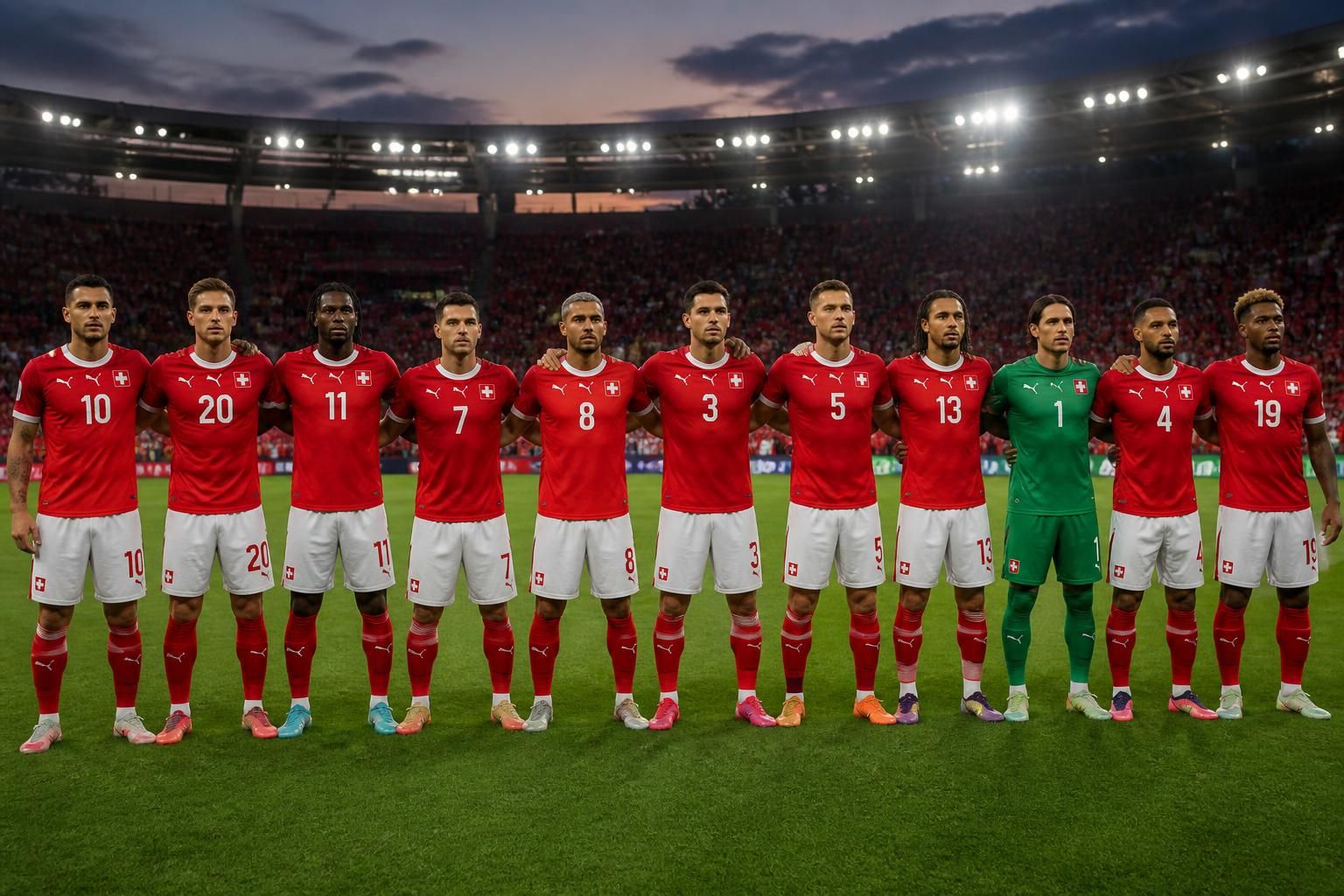
Swiss national team fans are buzzing as the official team lineup for the 2026 FIFA World Cup has been unveiled. The Switzerland football squad brings together a blend of seasoned veterans and fresh talents, carefully assembled by coach Murat Yakin, as the nation prepares for this global tournament. With the tournament set to unfold across three host countries—the United States, Canada, and Mexico—the logistical and infrastructural efforts behind the scenes underline the scale and excitement rolling into this event. Switzerland finds itself in a competitive Group B, alongside Canada, Qatar, and Bosnia-Herzegovina, setting the stage for some intense international football clashes.
In light of the expanded 48-team format that has reshaped the World Cup, teams like Switzerland have had to sharpen their rosters and strategies to navigate a longer, more demanding competition. The hosts have harnessed significant infrastructural investments, from revamped stadiums to enhanced transport links, aiming to ensure a smooth experience for teams and fans—and Switzerland’s squad will be keen to capitalize on this well-oiled tournament backdrop.
Switzerland’s coach Murat Yakin has notably maintained the core group of experienced stalwarts like Granit Xhaka, who will captain his fourth consecutive World Cup, solidifying his place as a national icon. Yet, Yakin hasn’t shied away from surprises; youthful talents like Johan Manzambi and the resolute forward Zeki Amdouni have been given roles, the latter carrying a heavy weight of expectation after recovering from a serious ACL injury. Although Amdouni’s season was disrupted and saw limited club action with Burnley, his impressive international goal tally convinces that risk is a calculated one. This mix of grit and youth will be pivotal in tackling the competitive group stage.
What to Expect from the Swiss National Team at the 2026 World Cup ⚽
The World Cup roster spotlights key names—goalkeepers Gregor Kobel and Yvon Mvogo offer depth between the posts, while defenders like Manuel Akanji bring championship pedigree fresh off Inter Milan’s Serie A triumph. Midfielders remain Switzerland’s engine room with Remo Freuler and Denis Zakaria balancing control and physicality. On attack, in-form players such as Breel Embolo and Noah Okafor provide creative dynamism to a forward line eager to test their mettle on football’s biggest stage.
Though Switzerland carries a solid reputation, the friendly and qualifying campaigns hint at areas needing sharpening—chiefly consistency and depth—to outperform traditionally strong sides like Canada, whose preparation and home support cannot be underestimated. The Swiss team’s unconventional way of announcing their lineup through a puzzle-like social media campaign reveals a creative touch off the pitch, building communal energy and anticipation ahead of kick-off.
Swiss Squad Matchups and Tournament Logistics
Switzerland’s group matches are set across North America, a logistical advantage that should help reduce player fatigue compared to other teams facing more travel. Kicking off on June 13th against Qatar in Santa Clara, California, the Swiss will then face Bosnia and Herzegovina in Inglewood before the final group game against Canada in Vancouver. These fixtures not only test the squad’s adaptability but place them firmly in venues designed with the latest FIFA standards to spotlight fair play and fan experience.
The Qatar vs Switzerland matchup at the tournament opener promises a clash of contrasting styles, while the high-altitude environment and passionate North American crowds create an added layer of challenge. With stadiums equipped with advanced pitch technology and enhanced media facilities, the 2026 event symbolizes FIFA’s commitment to pushing international football’s boundaries.
Global Perspectives: Where Switzerland Fits Amid 2026 Favorites
The 2026 World Cup has seen favorites like Brazil, Germany, and France draw the limelight given their deep talent pools and historic achievements. Switzerland, though not traditionally viewed as a tournament favorite, has quietly built a squad capable of disrupting odds. With a mix of defensive solidity and emerging offensive threats, they are equipped to navigate the novel tournament structure, which demands both stamina and tactical versatility.
The expansion to 48 teams and the tri-nation hosting format complicate travel and scheduling for many, but Switzerland’s grouping in North America strategically minimizes these challenges. Their balanced team composition means they can both absorb pressure and strike swiftly—a critical combination in this elongated competition format. Observers will watch how newcomers like Johan Manzambi develop as they gain tournament experience, potentially becoming Swiss football’s new generation leaders.