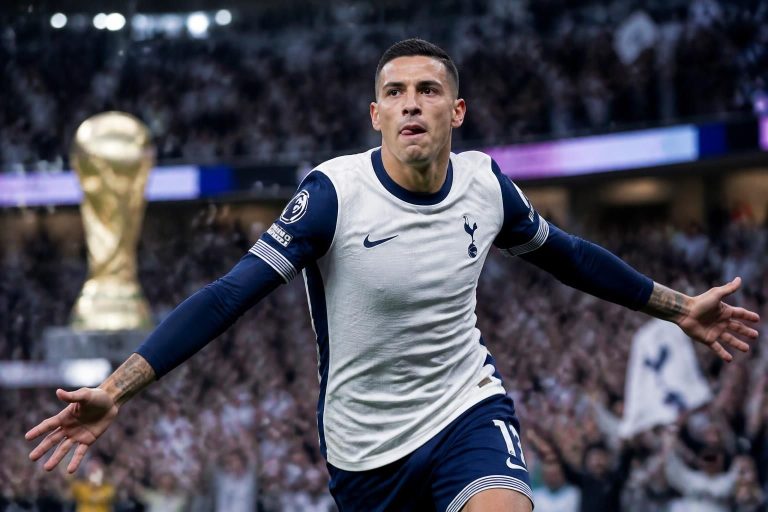
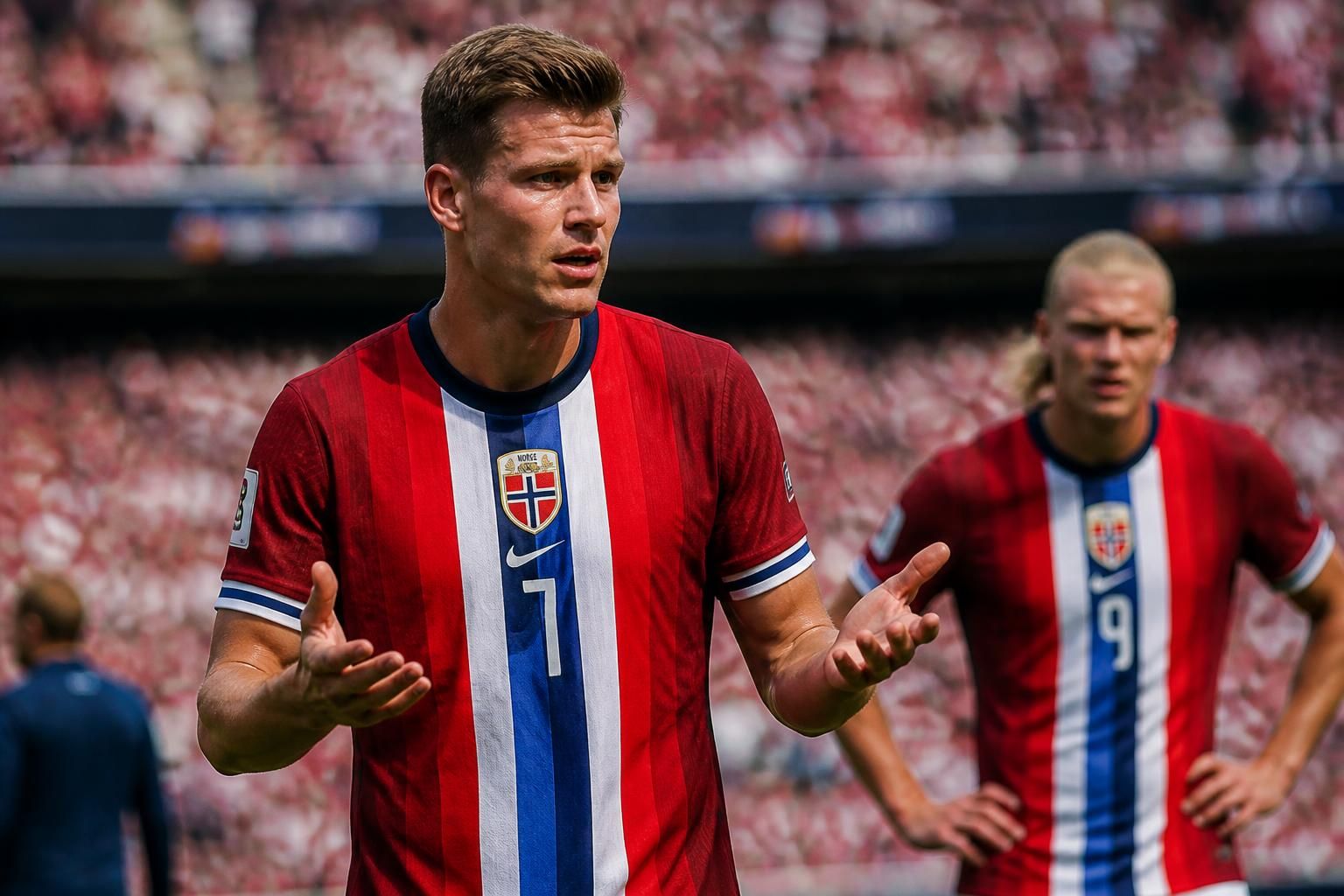
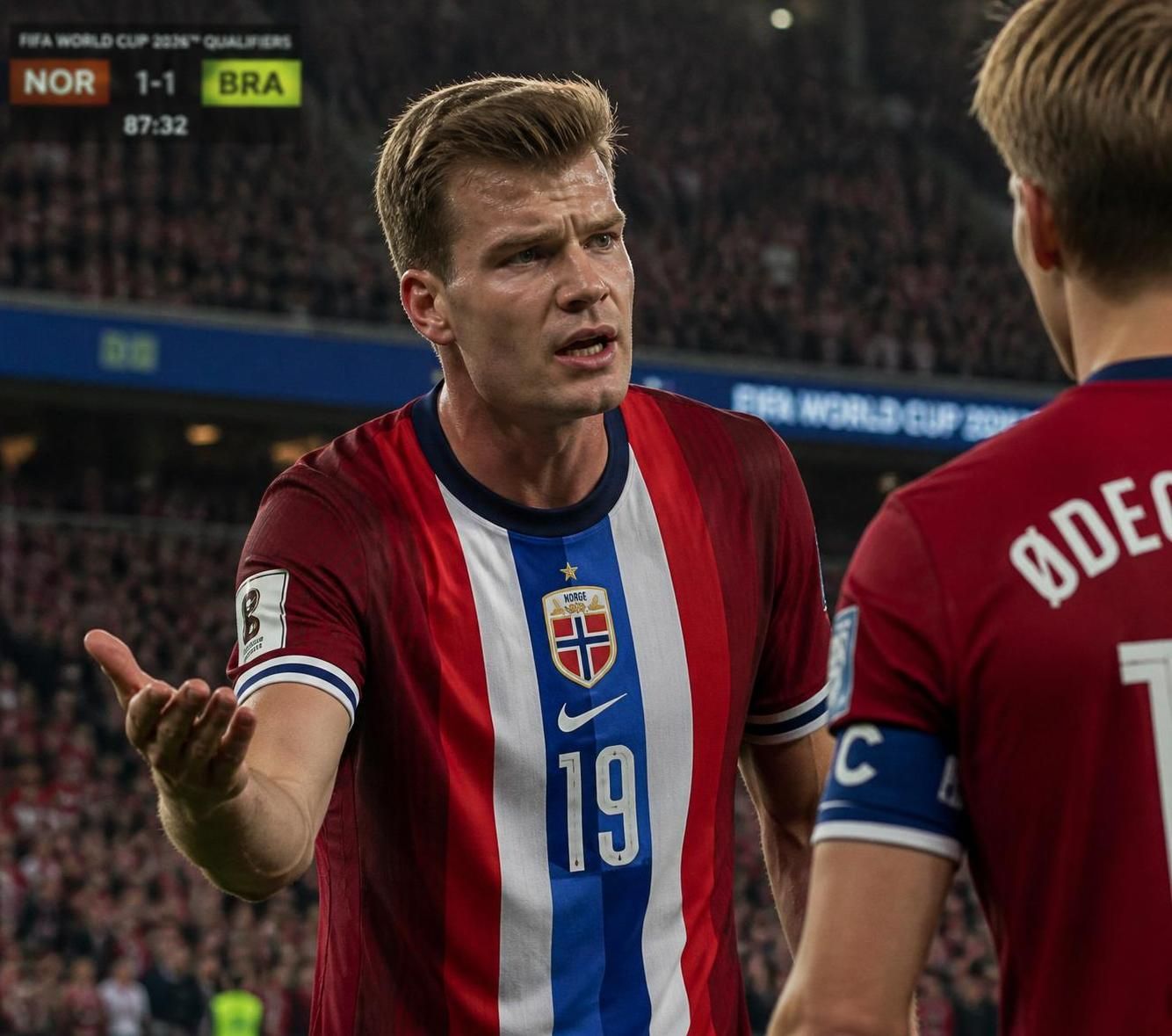
During the 2026 World Cup quarter-final clash between Norway and England, a moment that will be dissected for years occurred when Alexander Sorloth chose not to pass to his teammate Erling Haaland, Norway’s leading scorer and a figure synonymous with lethal finishing. Norway led the game 1-0 when Martin Odegaard delivered a precise ball to Sorloth in the 44th minute, with Haaland positioned perfectly for an advantage. What followed was a hesitation and a personal attempt by Sorloth to bypass an England defender, John Stones, rather than making a straightforward pass that could have doubled the lead.
This decision has since ignited widespread analysis and criticism, especially given how crucial it was at such a critical moment in the tournament. Former England striker Alan Shearer, among others, was vocal in condemning the choice, pointing out how the opportunity to extend the lead slipped away, altering the trajectory of the match. England swiftly responded, with Jude Bellingham tying the score three minutes later, and eventually clinching a 2-1 victory in extra time, a result that crushed Norway’s historic World Cup ambitions.
Alexander Sorloth’s Explanation of the Pivotal Passing Choice Against England
In the aftermath, Sorloth provided a candid player interview that shed light on his football decision during that moment. He recalled assessing the situation carefully: “I take a touch and look up, and then I see that Stones blocks that pass. Then I take another touch, and that is too bad. I wait for him to make a move instead of me making him make a move.” His intention, according to him, was initially to pass to Haaland, but realization dawned that the window for that pass had closed, prompting a shot that was subsequently blocked.
Such a miscalculation highlights the razor-thin margins in match strategy particularly when intense pressure mounts in games of this caliber. This hesitation perhaps embodied the mental tension players face when balancing instinct against tactical prudence in high stakes team dynamics. Norway’s head coach, Ståle Solbakken, acknowledged the excruciating narrowing of options under physical fatigue and the heat’s impact but was reluctant to attribute blame solely to environmental factors.
The Ripple Effect in Norway’s Campaign and Broader Implications
The cost of this incident went far beyond a moment’s hesitation. Norway, reaching their quarter-finals for the first time since their 1998 World Cup participation, were on track for a historic semifinal appearance. The failure to convert a chance to lead 2-0 eventually tipped the scales into England’s favor and underscores how individual moments can shape entire campaigns.
Individually, Haaland had been the tournament’s talisman, netting seven goals and almost topping the charts behind Lionel Messi and Kylian Mbappé. In contrast, Sorloth did not manage any goals or assists, a stark contrast that fuels scrutiny over his passing choice in the game’s defining moment.
For those interested in dissecting more about team performances and tactical breaks from the World Cup 2026, the analysis available on World Cup 2026 quarterfinals offers an in-depth evaluation of how fine margins decided the course of the tournament.
Critical Moments in Football: When Split-Second Decisions Alter Outcomes
Football, like many sports, often hinges on split-second decisions that sculpt the narrative of matches and even legacies. Sorloth’s hesitation stands as a reminder of how situational awareness and rapid assessments are paramount in game analysis and match strategy. The incident reflects the complex interaction between a player’s personal judgement and the broader team dynamics that dictate success or failure on football’s grandest stages.
Reflecting on this moment also invites broader questions about player decision-making under pressure, especially when dealing with high-caliber teammates whose finishing prowess, like Haaland’s, can decisively change the match’s outcome. The maze of instantaneous choices makes the role of minds sharp and psychologically resilient, a topic extensively explored in premium football coverage such as the insights from Canada 2026 World Cup.