
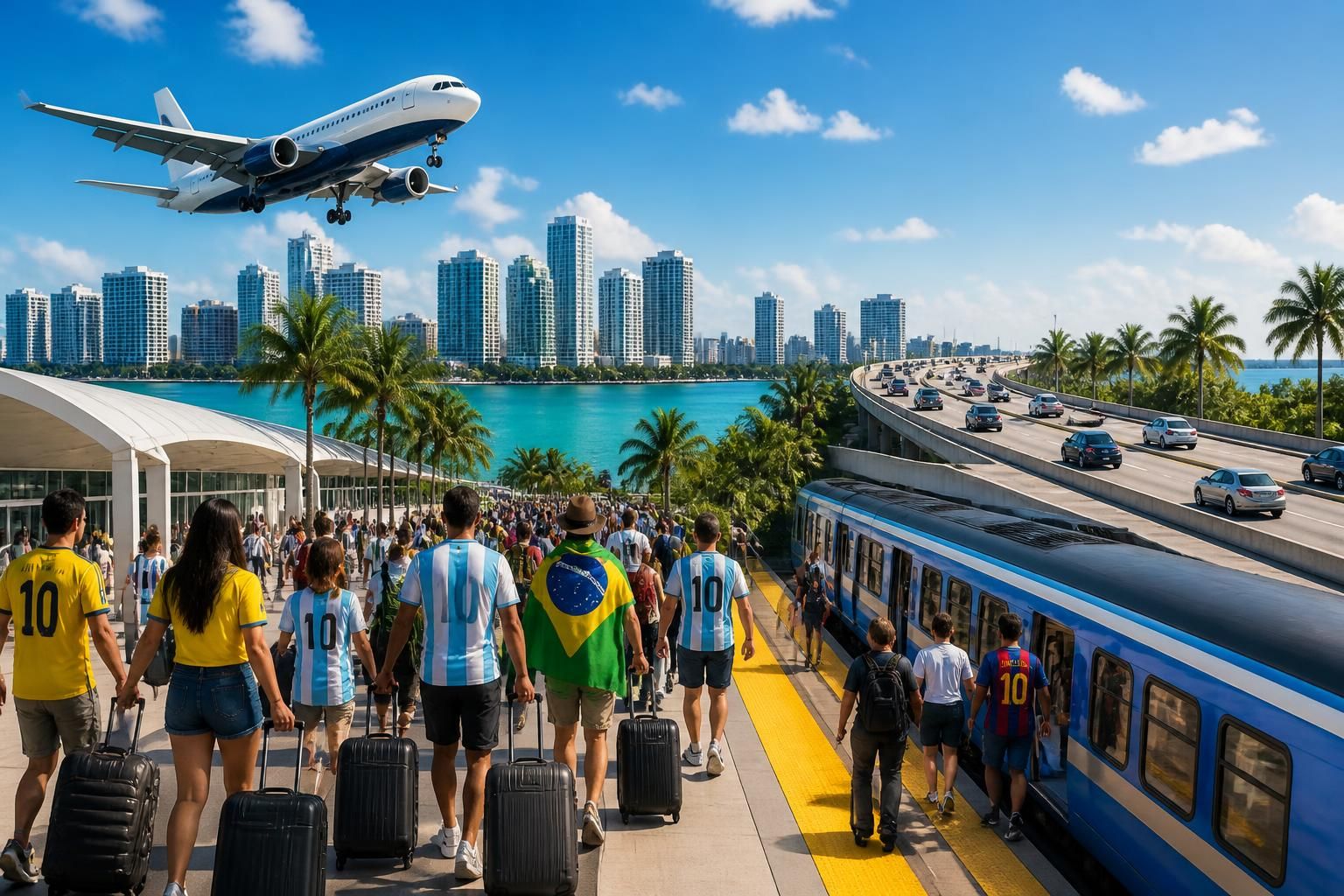
Getting to Miami for the 2026 FIFA World Cup is shaping up to be an adventure as intricate as the tournament itself. The famed Hard Rock Stadium in Miami Gardens, known for hosting major sports and entertainment events, will serve as a central stage for key moments in this global football extravaganza. But unlike stadiums nestled in urban cores with immediate subway access, Hard Rock Stadium sits in a suburban landscape about halfway between Miami and Fort Lauderdale, creating a transportation challenge that demands both strategic planning and patience. Fans will navigate a complex web of options including regional trains, shuttle buses, rideshares, and scattered parking areas, all orchestrated to handle the mass influx of supporters the World Cup magnetizes. Adding to the anticipation, Miami’s public transit system, consisting mainly of the Metrorail and the free Metromover downtown, acts as the backbone for getting close, but fans will still face the “last mile” hurdle that shuttle services and rideshares must cleverly bridge. For anyone mapping their travel itinerary—from flights touching down at Miami International Airport to the journey along bustling highways—understanding the city’s nuanced mobility plan is crucial.
Miami’s approach to transportation during the World Cup reflects a balancing act between efficiency and reality. With no direct rail line to the stadium and a landscape dominated by highways and sprawling parking lots, officials encourage game-day attendees to embrace a multi-modal approach, often starting from transit hubs like Martin Luther King Jr. Plaza or Aventura Station and finishing with shuttles or a brisk walk through heavy crowds. Expect shuttle hubs and park-and-ride lots to be your friend, but plan for long queues and timed departures—environmental and security concerns necessitate strict vehicle controls within stadium zones. Despite these challenges, the city is nudging fans to leave their cars behind; traffic snarls during past major events here have set a precedent for the necessity of well-coordinated public transit and shared rides. For international visitors aiming to catch every thrilling match, early arrivals are non-negotiable to beat the inevitable post-match congestion. Tickets in your pocket will gain you access through tiered security zones designed to streamline flow while maintaining tight safety standards. Behind this scene, infrastructural developments and transit upgrades promise to smooth your journey, yet Miami’s sprawling geography and limited rapid transit options serve as a reminder: this World Cup will test even the most seasoned traveler’s logistical skills.
Mastering Miami’s Transportation Maze During the FIFA World Cup 2026
Navigating Miami’s transportation ecosystem for the World Cup isn’t just about knowing your buses from your trains; it’s about understanding layered systems where convenience often competes with capacity. The Hard Rock Stadium, while iconic, is located in Miami Gardens away from dense urban transit infrastructure. There’s no direct train line to the stadium, forcing reliance on a mixed transit model that starts with regional trains like Brightline or Tri-Rail funneling fans to key hubs at Aventura and Golden Glades, from where shuttles run frequently to the venue. This “last mile” problem requires patience and stiff shoes, as shuttle drop-off points lie just outside stadium security perimeters. While rideshare apps like Uber and Lyft provide alternative routes, expect them to face the same stadium perimeter restrictions and surging post-game demand, so walking up to 20 minutes after drop-off isn’t unusual.
The city’s official stance encourages ticket holders to harness the free Miami Game Day Express Shuttle system running from four major hubs scattered strategically around the region, including transit-station connections that align with the Metrorail and major bus routes. Traffic management will be rigorous with temporary road closures and police-directed traffic flows to handle the surge around match days. With local experience and advice, such as that from Christine Kindt—a longtime attendee of events at Hard Rock Stadium—fans are urged to arrive hours ahead of kickoff to avoid being caught in snarls and to secure parking spots which will be in high demand given that stadium lots will be partly cordoned off for operational needs. This hybrid approach combines the necessities of a sprawling suburban environment with the imperative to reduce congestion and carbon footprints.
Flights and Arrival Options for World Cup Fans
MIA (Miami International Airport) serves as the primary gateway for international visitors, boasting convenient Metrorail access to downtown and a heavy load of international flights connecting Europe, Latin America, and North America. Alternative airports like Fort Lauderdale-Hollywood International, just a 30-minute drive up the coast, and Southwest Florida International offer backup choices but extend travel times. For a smooth landing and onward trip toward your match-day aventure, planning flights and connecting transport in advance is essential. For a comprehensive look at hosting cities and travel logistics, check out detailed guides on World Cup 2026 locations and specific host cities for the event.
Accommodation and Local Mobility Insights
Choosing where to stay requires balancing proximity to the stadium against access to Miami’s walkable neighborhoods such as South Beach or Brickell, which offer vibrant tourism experiences but lack direct transport to Hard Rock Stadium. Renting a car might seem tempting given Miami’s sprawl, but expect soaring rental prices and intense traffic on match days. Instead, a smart combination of public transit, ridesharing, and shuttles—paired with flexible accommodation located near transit hubs—can optimize your itinerary. Pay particular attention to parking options and book passes well in advance, as local availability will likely dip due to World Cup demands. Insider tips from locals advise securing early arrival and utilizing park-and-ride facilities that reduce stress and congestion near the stadium. This hybrid logistic strategy represents the best compromise between Miami’s car-oriented layout and the event’s immense public transportation challenges.