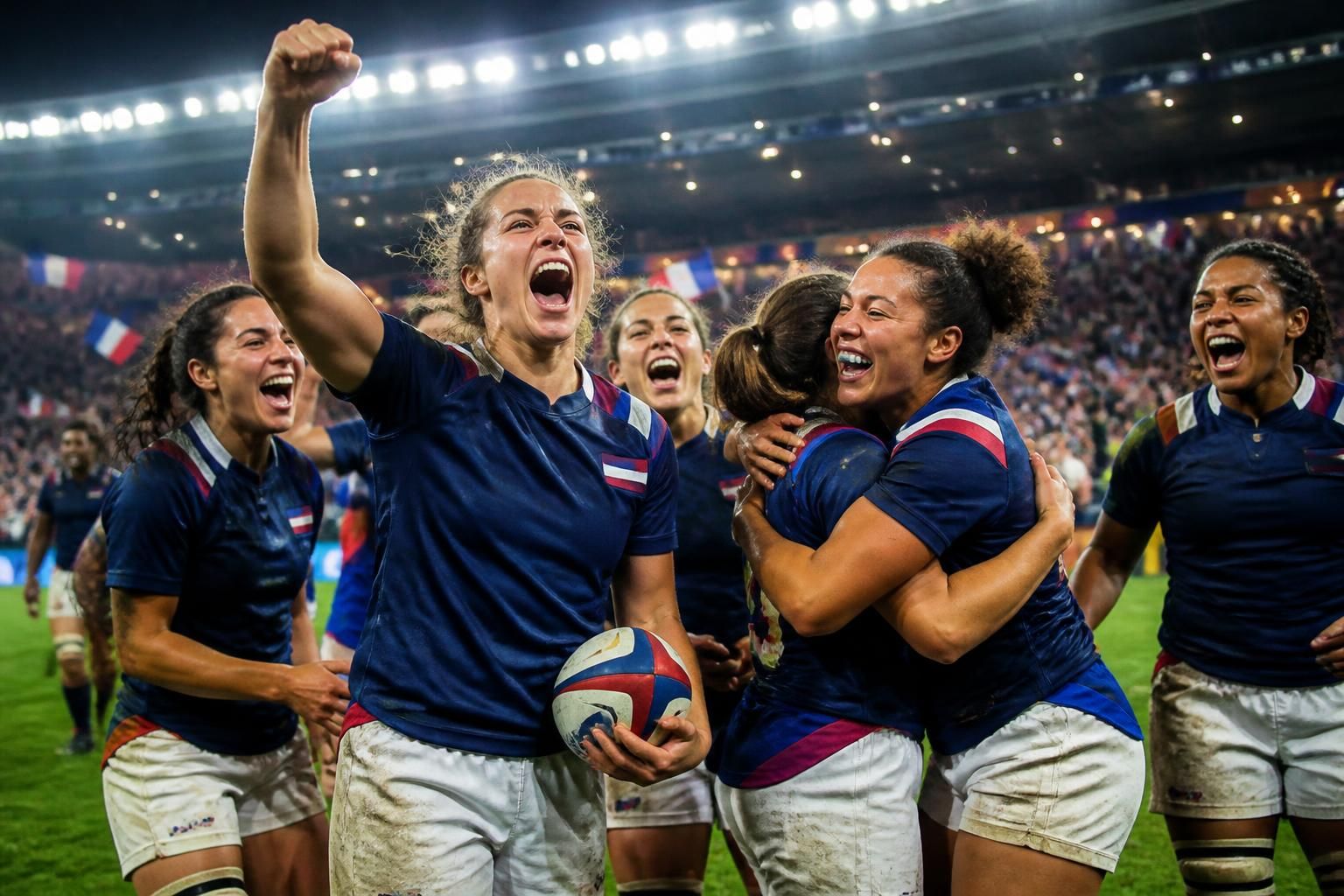
After four decades of neglect, the pioneers of French women’s rugby have finally received the recognition they deserve. In a poignant moment during the 2026 Women’s Six Nations clash between France and Italy, eighteen members of the original 1982 French women’s rugby squad were honoured. These trailblazing athletes, who fought to break barriers in a sport long dominated by men, not only shared a rousing rendition of the Marseillaise with the current generation but also received their first official national jerseys — a symbolic gesture rectifying a long-standing oversight.
Despite the French Women’s Rugby XV securing a commanding 40-7 victory over Italy, the real win belonged to these pioneering women, who finally had their place in the nation’s sports history cemented. This ceremony brought together past and present, acknowledging how these early athletes laid the groundwork for gender equality in rugby. It was a long overdue act of justice, a recognition of the trailblazers who persevered without institutional support and whose efforts inspire the women’s sports movement today.
In parallel with their celebration, the current French women’s squad remains a powerhouse. After a convincing win against Italy to kick off the 2026 Six Nations, France’s determination to clinch their first title shines brighter than ever. Yet, their achievements are now intrinsically linked to the struggles and sacrifices of those who wore no official jersey in 1982 when they faced the Netherlands. That historical match was France’s first-ever women’s international rugby test, played without the emblematic blue-white-red coq on their shirts.
Honouring the Pioneers: Why Recognition Matters in Women’s Rugby
The delivery of official jerseys to the 1982 trailblazers was more than symbolic. It restored dignity to athletes who pioneered the sport under difficult circumstances, often overlooked by governing bodies and the media. This act serves as a corrective narrative in French women’s rugby, highlighting the essential role of these rugby pioneers in shaping the sport’s landscape.
Such gestures resonate deeply within the community, fostering a renewed sense of pride. As co-head coach David Ortiz and players like scrum-half Pauline Bourdon Sansus have noted, the present squad owes their opportunities to these predecessors. This renewed recognition also places pressure on French rugby institutions to continue advancing gender equality, ensuring women’s rugby receives resources and visibility commensurate with its growing status.
Minister of Sports Marina Ferrari’s statement encapsulates this mission: “It was important to shine a light on these women who gave generations of girls the desire to pick up the ball and play.” This milestone aligns closely with ongoing efforts seen at local clubs like those highlighted in Gueret RCGC, where women’s rugby is gaining momentum at grassroots levels, reflecting broader social change.
The Long Road: Challenges Faced by French Women’s Rugby Through the Decades
Looking back, the journey of women’s rugby in France has been fraught with systemic hurdles. The 1982 match against the Netherlands was historic yet went largely unrecognized, with players denied official uniforms or institutional backing. These discrepancies epitomize the broader challenges faced by women in male-dominated sports sectors, from unequal funding to minimal media exposure.
This absence of formal recognition affected not only the players’ morale but also hindered the sport’s development at a national level. Only in recent years has there been tangible progress, with increased international success and a growing fan base. Still, France’s women’s rugby teams have struggled—highlighted by the inability to reach World Cup finals despite consistent performances. These struggles underscore why acknowledging the contributions of past generations is essential: it contextualizes current aspirations within a richer tapestry of perseverance.
The ongoing narrative can be contrasted with efforts to enhance women’s sports structures elsewhere, for instance, in regions focusing on female empowerment through sport like Langres Women’s Rugby. These initiatives widen the horizon for breaking down gender barriers and offer practical models for growth and recognition.