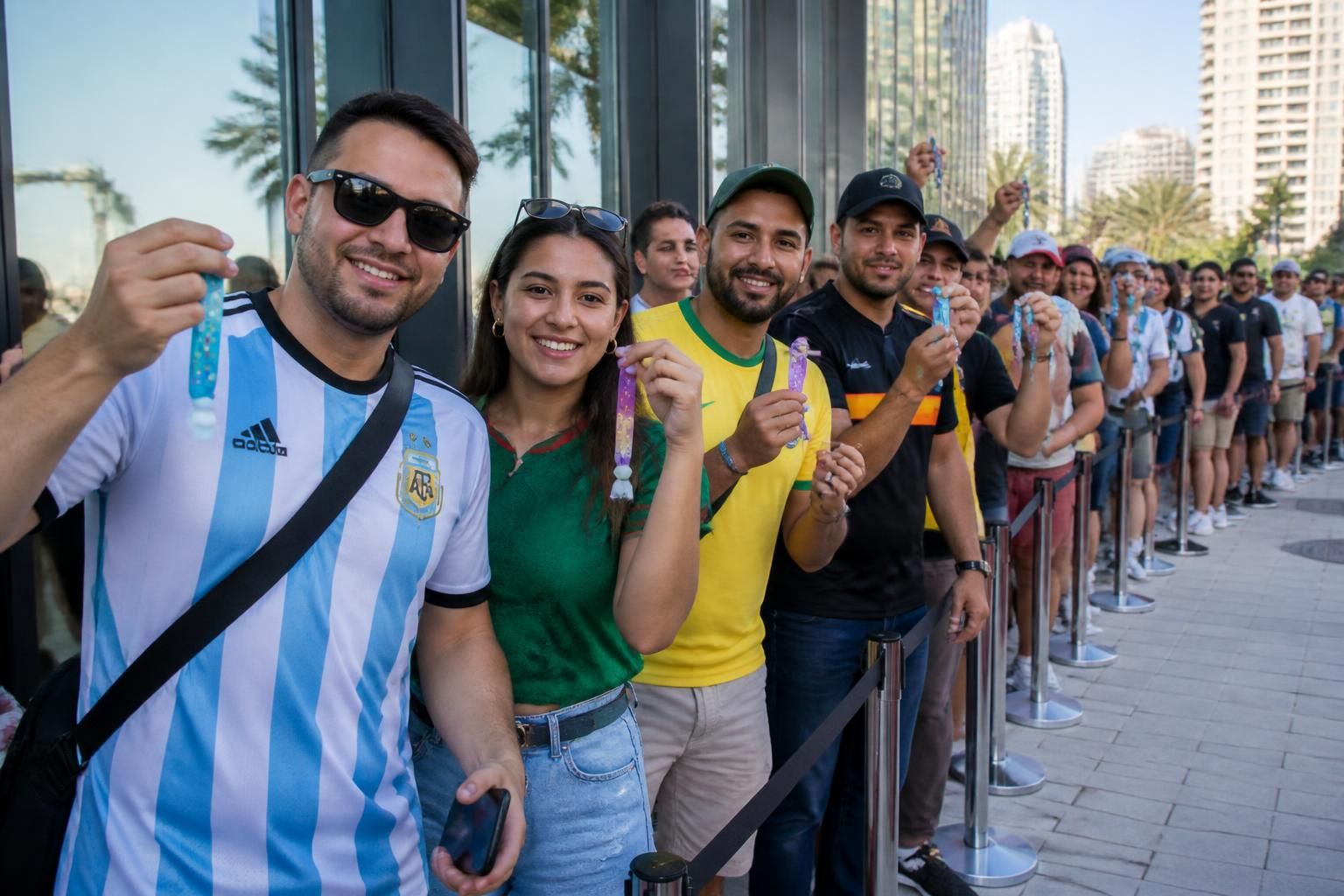
At the heart of the 2026 FIFA World Cup’s fan experience lies an unexpected phenomenon: what was intended as a free, simple collectible—customizable charm bracelets distributed by Bank of America—has morphed into the tournament’s most coveted souvenir. More than 700,000 of these free World Cup bracelets have been snapped up by enthusiastic attendees standing for hours in blistering lines at fan events hosted across the 11 U.S. host cities. This surge in demand has not only turned these once modest trinkets into highly sought-after memorabilia but also sparked a bustling resale market where fans are now flipping their freebies for profit.
Hours of waiting in line at venues such as Centennial Olympic Park have become a familiar story, underscoring the irresistible appeal of these bracelets among devotees. As frenzy swelled, the initial first-come, first-served distribution system quickly became unmanageable, prompting organizers to introduce ticketed time windows to streamline the process. Yet, this adjustment hasn’t dampened the resell trend: fans who endured the wait now leverage the popularity of these free World Cup bracelets to generate income on secondary markets. Notably, the free wristbands have transcended their role as mere souvenirs to become status symbols carrying social currency, shared eagerly on social media and sparking lines that stretch for hours, if not days.
How Free Fan Bracelets Sparked a Secondary Market Frenzy at the World Cup
The unexpected commercialization of these free giveaways challenges conventional views on fan culture and event swag. Though intended as tokens of appreciation by Bank of America, the free bracelets embody a larger commentary on consumer behavior at major sporting events in 2026. The wave of fans reselling them reveals how a simple collectible can swiftly gain monetary value when scarcity meets demand. Stories from the Philadelphia Fan Fest highlight wait times peaking at eight hours, reflecting the extraordinary lengths fans go to obtain—and ultimately capitalize on—these items. This dynamic invites scrutiny over whether event organizers and sponsors should reconsider distribution methods to curb profiteering while still rewarding genuine supporters.
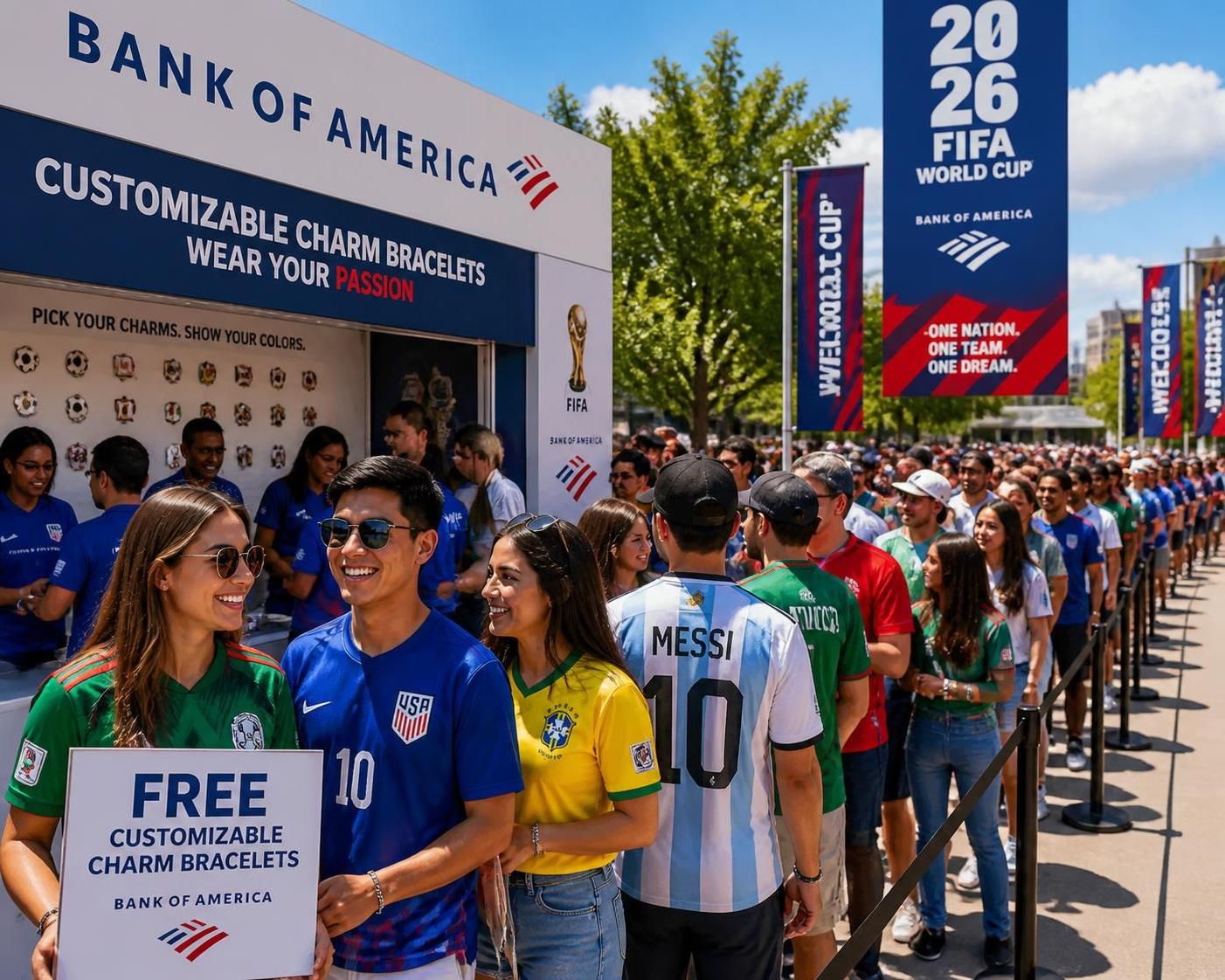
From Hours in Line to Resell Profits: The True Cost of Free Bracelets
Behind the scenes, the notion of “free” has taken on a more nuanced meaning. The cost for many fans was not financial but temporal and physical endurance. Hours spent under the summer heat—sometimes four to eight hours depending on the location—highlight a dedication bordering on obsession, raising questions about the fairness of such a distribution system. Moreover, the fact that some then opt to resell these free World Cup bracelets introduces ethical debates about fan loyalty versus opportunism. Is waiting for hours justifiable if the reward becomes a resale commodity? Observers note that while ticketed entry systems have helped manage crowds, a fundamental challenge remains for sponsors who must balance accessibility with exclusivity to prevent exploitation.
Resell Market Dynamics: How Tickets and Timing Affect Bracelet Distribution
The pivot to ticketed time windows at major fan events epitomizes an attempt to professionalize the distribution process amid explosive demand. While these tickets aim to provide equitable access, they have inadvertently fueled anticipation, turning receiving a bracelet into an event in itself—a coveted ticket to a cultural moment. This shift also alters social behaviors, as fans plan their day around specific timeframes, building anticipation that dovetails with resale strategies. As such, the intersection of waiting hours and event tickets demonstrates the modern fan’s savvy understanding of scarcity and value creation, blending patience with entrepreneurial spirit.
Furthermore, this phenomenon offers parallels with other sport-related collectibles seen historically, yet with a contemporary twist. In contrast to conventional merchandise like jerseys or footballs, the Bank of America Fan Bands’ low-cost production combined with high demand has created an anomaly where free giveaways gain real-world resale power. Fans and collectors often exchange tips on maximizing their advantage, including attending multiple events across cities or trading online, demonstrating how fan culture adapts rapidly to market opportunities.
For a broader perspective on the interplay of sports enthusiasm and merchandising trends, one might find relevant insights at this review on sports events and merchandising. The 2026 World Cup scenario is an illustrative case study of how free promotional items morph into hot commodities and influence fan behavior worldwide.