
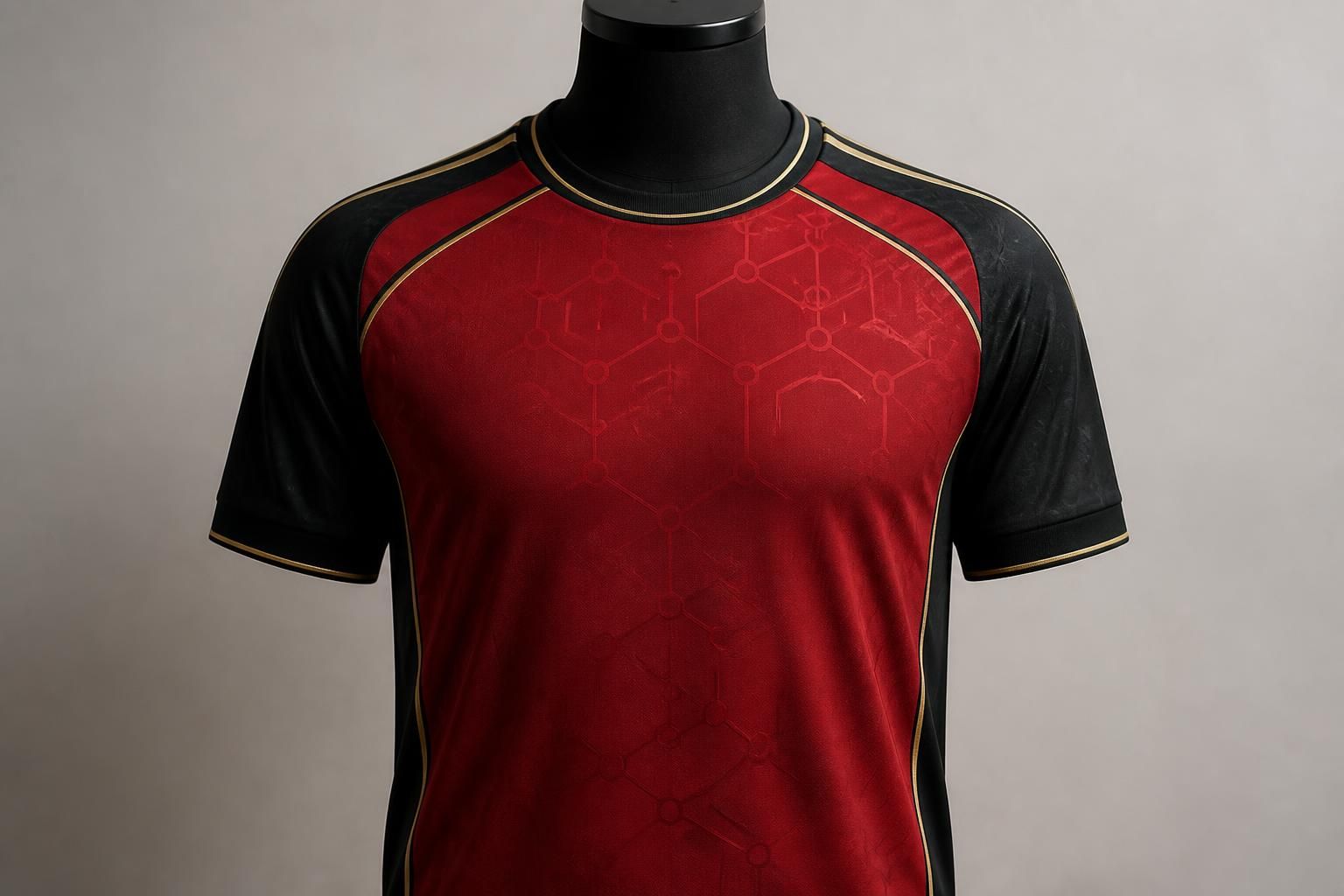
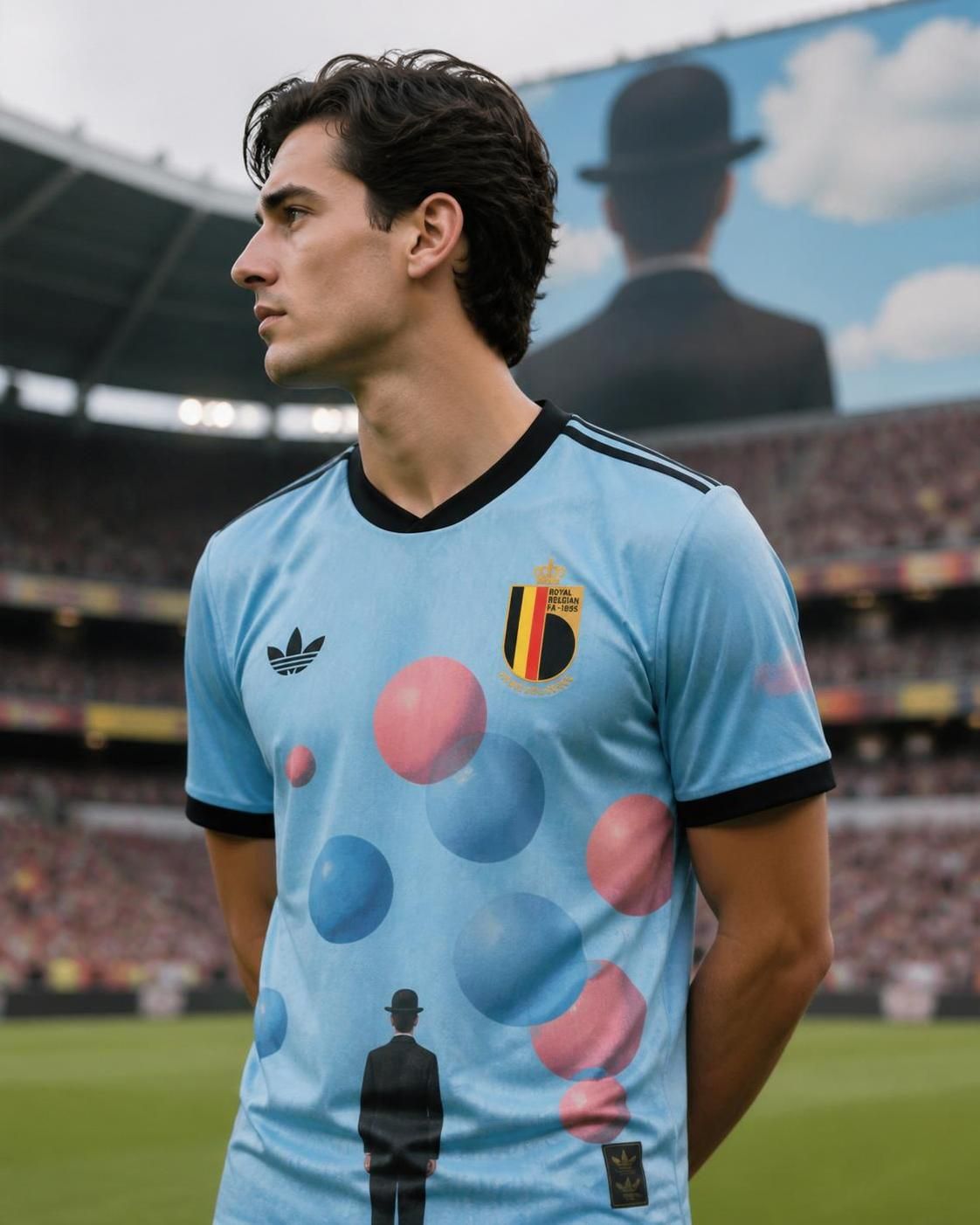
Belgium’s World Cup jersey has garnered significant attention not just for its striking aesthetics but for the clever cultural homage it embodies. Beyond football, this kit serves as a wearable tribute to one of Belgium’s most esteemed artistic icons, weaving the nation’s rich heritage into sportswear innovation. Departing from the traditional black, yellow, and red, the clever design introduces a robin’s egg blue and pink palette adorned with surrealistic spheres. It draws inspiration from the surrealist masterpieces of René Magritte, making the jersey a conversation starter that transcends the pitch.
This thoughtful design effort is the latest in a series of kits honoring Belgium’s distinctive cultural identity. Previous away jerseys have tipped their hats to national cycling prowess, the globally renowned Tomorrowland festival, and the beloved cartoon hero Tintin. Now, with this magisterial 2026 World Cup jersey, Belgium unabashedly celebrates the surreal, inviting football fans and art enthusiasts alike to explore the intersections of sport, culture, and design.
The jersey’s pattern, recalling Magritte’s 1931 Voice of Space, features metallic spheres hovering above a subtle soccer pitch reference through fine horizontal lines. This not only reinforces the fusion of football and art but also enriches the garment with multiple layers of meaning. Adding another level of depth, the collar bears the phrase “Ceci n’est pas un maillot”, echoing Magritte’s seminal work The Treachery of Images, challenging perceptions by declaring, “This is not a jersey.” Such artistry demands more than casual observation; it calls for reflection on identity, representation, and symbolism.
Belgium’s daring aesthetic choice arrives at a time when the Red Devils have shown dynamism on the field—most notably their commanding 4-1 win against the United States and a thrilling extra-time victory over Senegal, propelling them into the tournament quarterfinals. The jersey worn at today’s fixture against Spain at Sofi Stadium in Los Angeles stands as a testament to Belgium’s pride in its cultural treasures, blending athletic ambition with national expression. Those interested in exploring this artistic sportswear further can find authentic versions through Adidas or appreciate the wider narrative surrounding Belgium’s ongoing football and cultural journey.
Belgium’s World Cup Jersey: A Bold Football Design Celebrating National Heritage
The 2026 World Cup has seen many teams unveiling innovative kits, yet Belgium’s away jersey stands apart as a masterpiece of cultural storytelling within sportswear design. Breaking from their usual fiery black, yellow, and red, the team donned a design profoundly rooted in surrealism. Adidas collaborated with Belgian football authorities to bring to life a jersey that serves as more than just athletic apparel; it is an artistic nod to René Magritte’s enduring legacy.
The inspiration is immediately recognizable to those familiar with Magritte’s work—most pertinently, the spheres echoing those in Voice of Space, floating against the pastel backdrop. This choice fuses sport with national art history in a manner rarely seen at global tournaments. The jersey’s fine horizontal lines subtly mimic a soccer pitch, a detail that grounds the design firmly in its sporting context.
Such intricate symbolism does not only elevate Belgium’s kit to a status of cultural significance but also amplifies the team’s global identity, making it a clever marketing asset and an emblem of national pride. It is a remarkable synthesis of football performance needs and sophisticated creative vision, marking a milestone in how sportswear can become a canvas for heritage and storytelling.
A Surrealist Touch: The Artistic Foundations of Belgium’s Away Kit
The jersey’s most striking elements draw heavily from Magritte’s surrealist repertoire, reminding viewers that football kits can be hinged on ideas as much as functionality. Originating from Lessines, Belgium, Magritte’s legacy informs the jersey not just visually but conceptually.
“Ceci n’est pas un maillot” on the collar ingeniously references his famous 1928-29 painting The Treachery of Images, which questioned the relationship between objects and their representations by declaring “This is not a pipe” beneath a painted pipe image. Similarly, the jersey delicately invites viewers to reconsider what they see: a mere shirt, or a meaningful artifact.
Belgian midfielder Charles De Ketelaere embraced this surreal identity by featuring the jersey alongside a bowler hat topped with a floating apple on his social media before the tournament kickoff. This blend of football and fine art encapsulates Belgium’s approach—celebrating heritage without sacrificing modern athletic demands.
By merging these worlds, Belgium challenges stereotypes about sports uniforms and encourages a dialogue that spans beyond football fields, engaging fans of art and culture worldwide.
Belgium’s Cultural References in Football Kits: A History of Clever Homages
This is the fourth occasion Belgium uses its away jersey to pay tribute to the nation’s cultural riches. Previous iterations acknowledged Belgium’s celebrated cycling history during the 2016 European Championship, the internationally acclaimed music fest Tomorrowland at the 2022 World Cup, and the iconic cartoon The Adventures of Tintin at Euro 2024.
Each of these editions transformed a simple sportswear garment into a storytelling medium, offering fans a closer connection to Belgian heritage beyond slogans and logos. Adidas and the Royal Belgian Football Association continue to intertwine creative design with sporting excellence, ensuring that these jerseys not only perform on the pitch but also provoke conversation and admiration.
The Magritte jersey stands out even within this series, drawing from a sophisticated artistic context that few other football kits attempt. While limited editions quickly sold out, the jersey’s popularity has sustained a market for collectors and soccer fans eager to own a piece of Belgium’s distinctive World Cup narrative. More insights on this cultural synergy can be explored, particularly after Belgium’s recent advances in the tournament, with details accessible through comprehensive coverage of the World Cup 2026 quarterfinals.
Sporting Success Meets National Pride on the World Stage
The Red Devils’ recent 4-1 triumph over the United States in Seattle and a gripping 3-2 extra-time victory against Senegal solidify Belgium’s reputation as a formidable contender in the 2026 tournament. As they prepare to face Spain at Sofi Stadium, the team’s connection to national heritage through their striking jersey embodies more than just athletic ambition.
Evidence suggests that integrating cultural storytelling into uniform design can amplify team identity and fan engagement. Belgium’s jersey serves as a dynamic symbol bridging football’s global appeal and the country’s treasured surrealist tradition.
For followers keen to delve deeper into Belgium’s tournament journey and the socio-cultural threads woven through their sportswear, extensive articles and match analyses are available, including notable perspectives on the Spain vs Belgium showdown.