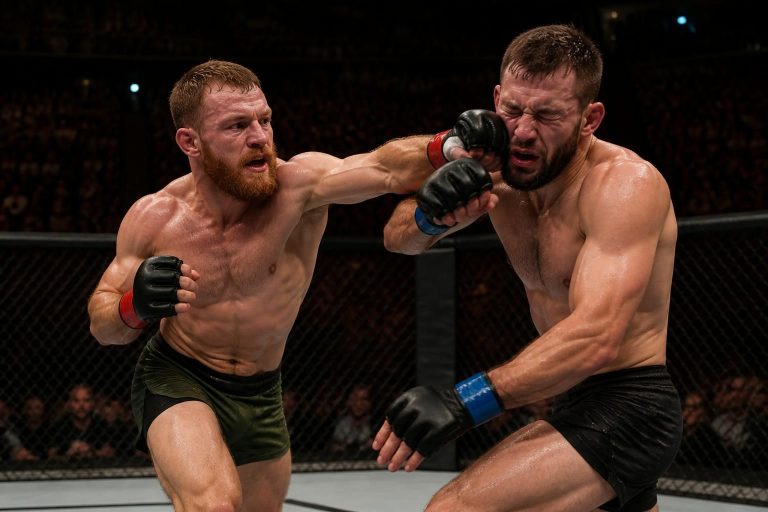
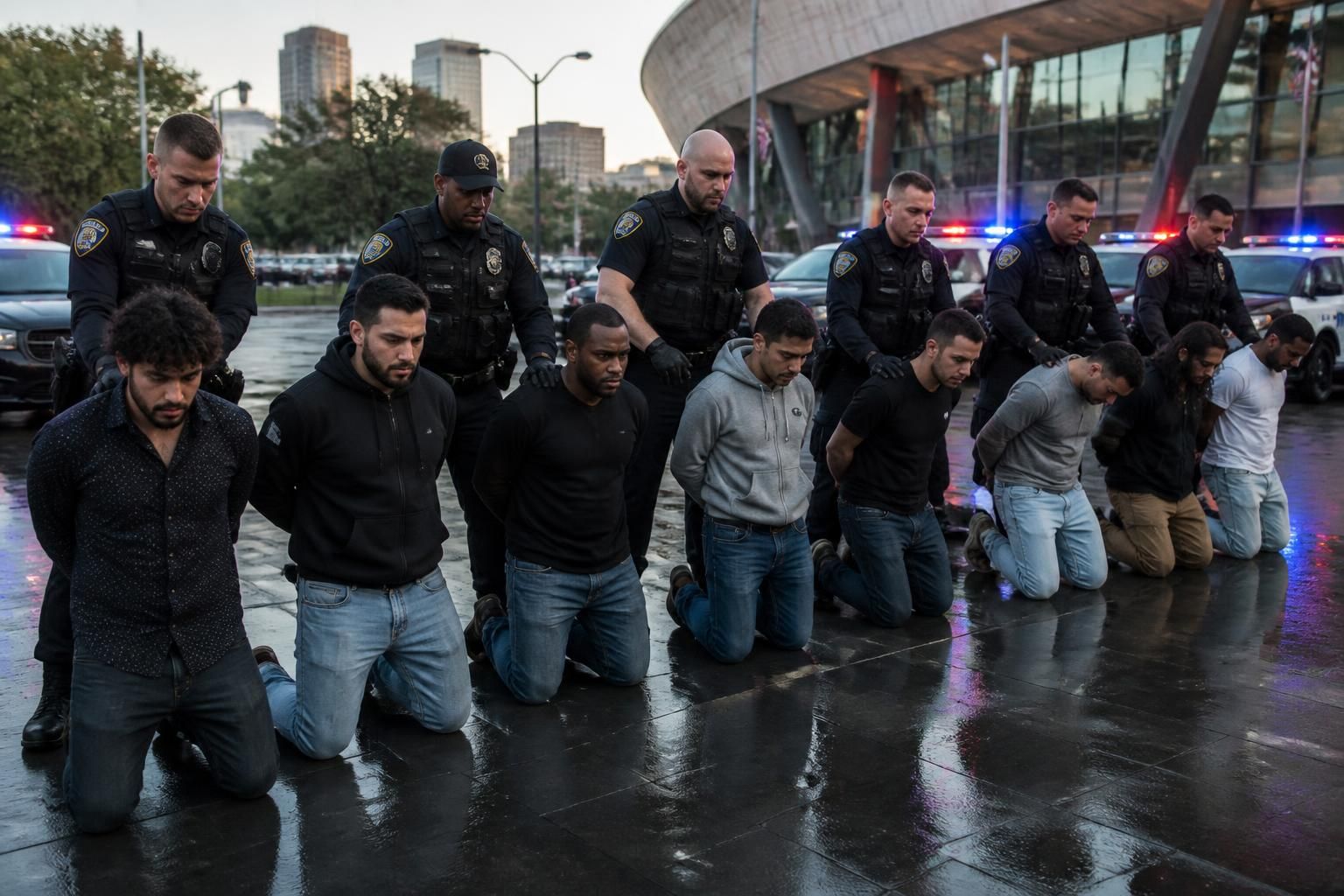
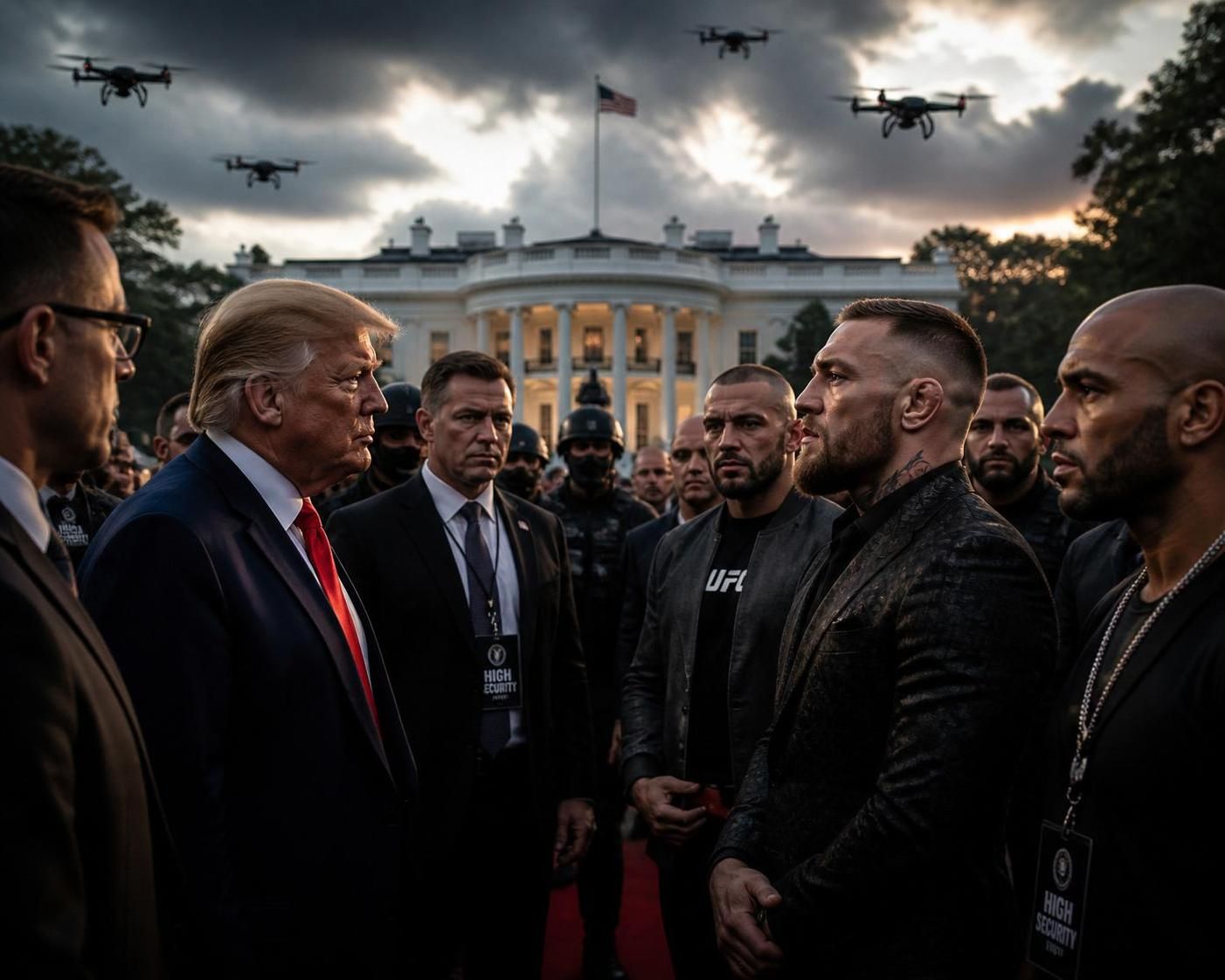
In a shocking development that shook the world of mixed martial arts and U.S. national security alike, eight men were charged in connection with a plot to attack Donald Trump’s MMA event held at the White House in June. The event, which marked the 80th birthday celebration of Donald Trump, saw around 4,000 carefully selected guests gather for a high-profile MMA spectacle, turning the White House lawn into a makeshift arena. However, beneath the pomp and political bravado, a conspiracy brewed that threatened to turn this night into a catastrophic failure of security.
The suspects, aged between 19 and 32 and hailing from various states, allegedly planned a coordinated assault involving explosive-laden drones and sniper attacks intended to assassinate not only former President Trump but several other top government officials. The plan aimed to cause chaos through a drone attack to force an evacuation, providing snipers clear shots at VIPs, including the U.S. President, Vice President JD Vance, and other federal leaders. Although Israeli Prime Minister Benjamin Netanyahu was targeted, he did not attend the event. The conspiracy was foiled thanks to effective law enforcement efforts, highlighting serious gaps and questions about security protocols for such remarkable MMA events intertwined with political symbolism.
Key Points in Brief 📌:
- Eight men charged in the United States with conspiracy and terrorism offenses over a plot to attack a Donald Trump MMA event.
- The attack plan involved armed drones and sniper tactics aimed at killing top government officials during the event.
- The MMA spectacle was held at the White House to celebrate Trump’s 80th birthday, attracting about 4,000 exclusive guests.
- Planning was coordinated online, with suspects spanning multiple states and utilizing digital platforms for recruitment and encouragement.
- Law enforcement agencies from multiple states intervened promptly to disrupt the terror plot just days before the event.
How the Plot to Attack Donald Trump’s MMA Event Unfolded
The plan to attack the MMA event on June 14th at the White House reveals a terrifying level of coordination and radicalization among a small but dangerous group. These eight men allegedly hatched their plot through online chat groups, recruiting members and stoking each other’s resolve to commit a terror act on U.S. soil. Their strategy combined modern technology—explosive drones—with traditional sniper techniques to maximize casualties and chaos.
Targeting an MMA event, especially one so politically charged and grandiose, is no coincidence. The staged fights on the White House lawn resonated beyond sports, symbolizing a combative political culture that some extremists aimed to exploit with violence. The involvement of drones in a planned terrorist attack marks a growing concern in the MMA world and security circles about emerging threats potentially disrupting future sporting occasions.
Security Implications for MMA and Political Events in the United States
The foiled attempt shakes the very foundation of security planning at high-profile MMA events, especially those tied to political figures. The blend of sports entertainment with political spectacle at Donald Trump’s White House MMA event put a spotlight on vulnerabilities that law enforcement and event organizers worldwide cannot ignore. Given that mixed martial arts continues to grow in popularity and cultural significance, organizers must rethink security strategies thoroughly.
The suspects’ ability to coordinate across state lines using digital platforms underscores the necessity for enhanced monitoring of online extremist networks. The 19 to 32-year-old accused did not act in isolation; they represent a worrying trend of young radicals drawn from various corners of the country, exploiting technological tools to plan high-stakes crimes. This incident should serve as a grave warning for MMA venues hosting politically sensitive events, where the margin for error is dangerously thin.
Lessons From the Failed Plot: MMA Events Under the Microscope
This unprecedented case forces everyone connected to MMA—from promoters and security personnel to fans—to reconsider how combat sports events intertwine with political narratives. The staging of the UFC Freedom 250 at an iconic location like the White House highlighted MMA’s rising status in American culture but also opened a Pandora’s box of security challenges.
Experts now emphasize the importance of comprehensive risk assessments, intelligence-sharing among agencies, and stringent control measures for access to events with political significance. The fact that the attackers targeted not only Donald Trump but multiple government officials shows how such events have evolved into flashpoints for wider political violence risks, going beyond mere sport.
Our eyes remain on how security measures adapt moving forward as MMA continues to capture the nation’s attention, reminding us that while the octagon can be a place of sport, it can also become a stage for serious real-world threats.
The Role of Technology in Modern Terrorism Threats to MMA
The emergence of drones as a weapon in this plot spotlights a growing menace. In 2026, drones have become more accessible and deadly, posing an unprecedented challenge to securing sporting arenas globally. The combination of drone technology with sniper expertise in this attack plot illustrates the blend of high-tech tools and old-school lethal precision, making it harder than ever for security teams to anticipate and neutralize such threats.
For MMA, a sport built around physical combat and strategic prowess, the intrusion of technological terror tactics demands new layers of preparedness. Future events must incorporate counter-drone technology, enhanced surveillance, and rapid response units trained explicitly for hybrid threats combining aerial and ground attacks.