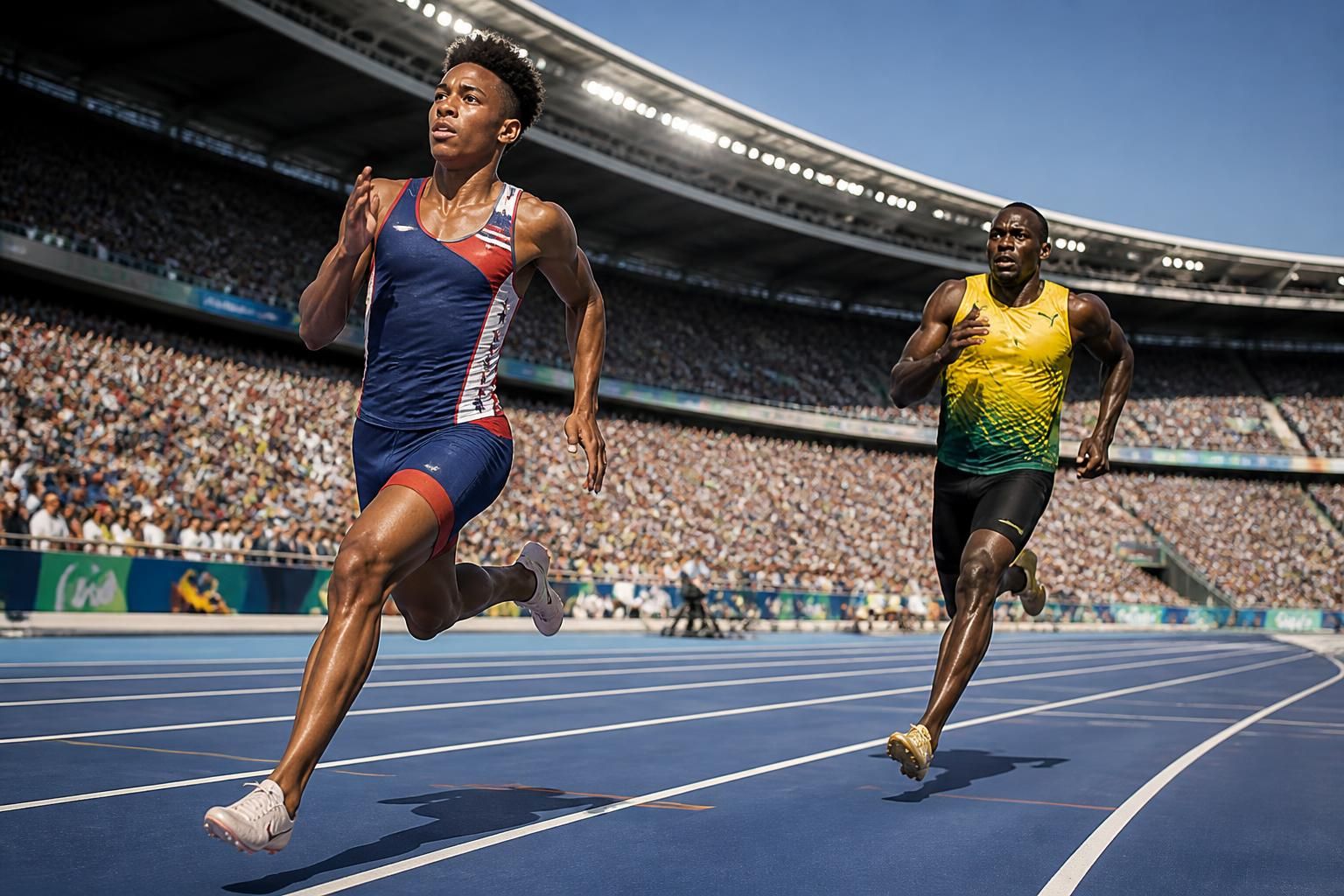
In the thrilling landscape of track and field, few moments resonate as profoundly as when the new breed of youth athletes challenges history. The 2026 Prefontaine Classic in Eugene, Oregon, delivered just that—a high-octane sprint race spotlighting US Teen Sensation Tate Taylor’s meteoric rise. At just 18, Taylor didn’t just compete; he shattered expectations by outpacing the reigning Olympic champion and moving past none other than Usain Bolt on the all-time under-20 list. This historic showdown has positioned Taylor firmly on the radar of athletics enthusiasts and skeptics alike, marking him as a defining figure in the future of sprinting.
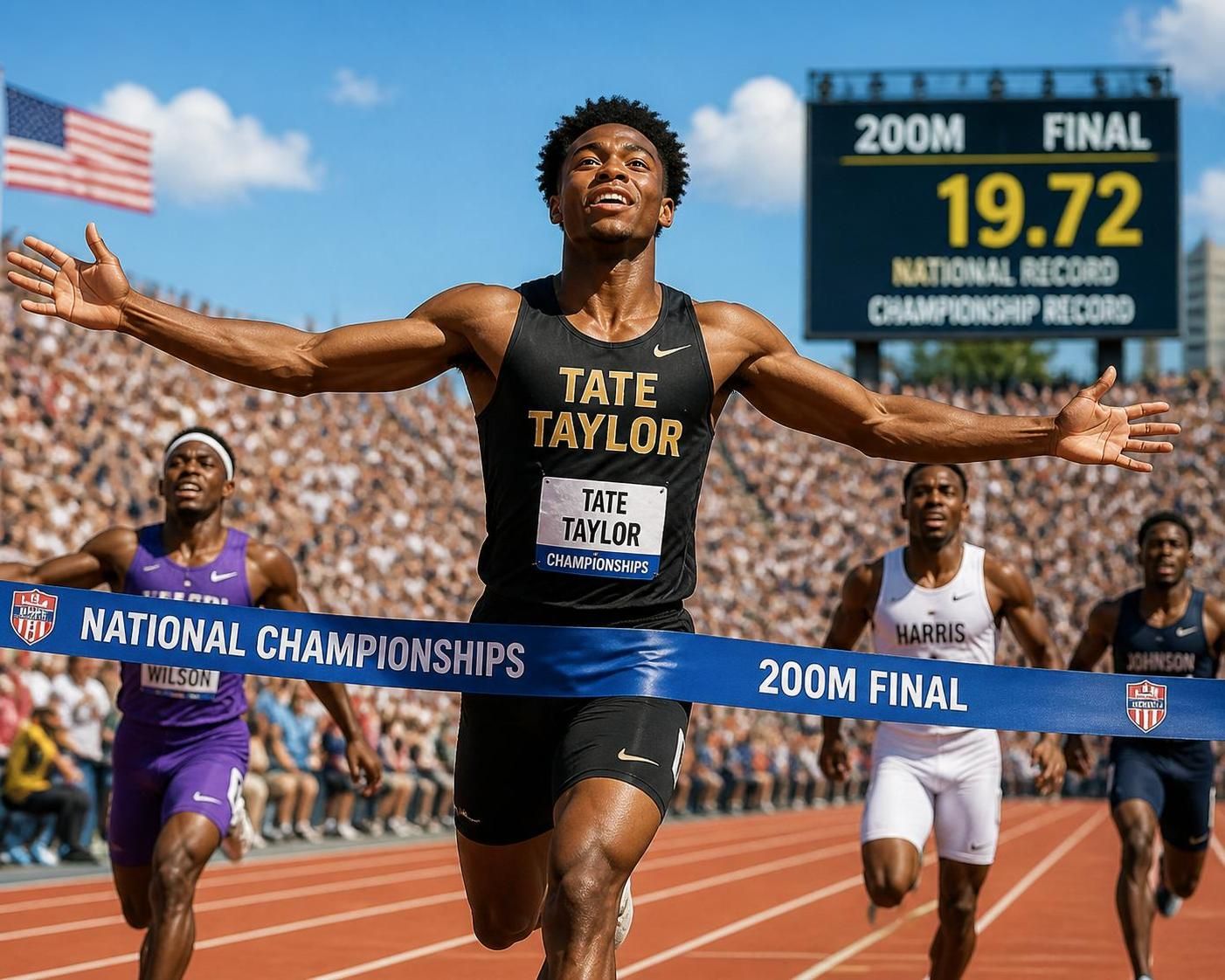
The event was a testament to dedication and raw speed, with Taylor clocking an extraordinary 19.75 seconds in the 200-meter dash despite a tough headwind. Previously, his record stood at a blistering 19.94 seconds, set just weeks earlier in Texas. Taylor’s time is now the third-fastest ever recorded by an under-20 athlete, nudging him ahead of Bolt’s youth best of 19.93. The only sprinters to eclipse this pace at such a young age are Australian phenom Gout Gout and the currently suspended Erriyon Knighton.
- ⚡ Tate Taylor’s breakthrough tears down the US high school national record and rewrites history among youth sprinters.
- 🥇 Defeating Olympic Champion Letsile Tebogo highlights Taylor’s rise on the global track and field stage.
- 🔥 Breaking Usain Bolt’s previous U20 record adds context to Taylor’s place among sprint legends.
- 🎯 Commitment to Texas Tech signals a strategic path towards elite collegiate and international competition.
How Tate Taylor’s Sprint Mastery Is Redefining Youth Athletics
When you analyze the numbers, it’s clear that Tate Taylor is not just racing competitors; he’s rewriting the sprinting script. Alongside the usual powerhouses, his 19.75 second finish in a hefty headwind elevates him beyond just an American sensation—he’s a global threat. While critics have often grappled with the transition from prodigy to professional, Taylor’s performances suggest a seamless trajectory. His strategic choice to forego the USA Outdoor Championships for the World U20 Championships in Eugene shows maturity and calculated ambition.
In a discipline where timing and technique are king, surpassing milestones previously set by record-breaking athletes like Usain Bolt doesn’t just offer bragging rights; it signifies a generational shift. Historically, the sprint scene has been less forgiving to teenagers, but Taylor’s case defies that pattern. It’s compelling to compare this breakthrough to the current basketball or football phenomenons who burst into the professional arena with similar fanfare but sometimes fade under pressure. Taylor seems set to avoid that fate, combining raw speed with tactical race execution.
Tactical Brilliance Behind Taylor’s Meteoric Rise
Unlike many young athletes who rely purely on natural talent, Taylor’s approach to race strategy reflects a deeper understanding of sprint dynamics. He wasn’t expecting to win against Olympic champion Letsile Tebogo, candidly admitting that he doubted himself before the race. Yet, that very skepticism might have fueled his performance, enabling him to push harder than anticipated. The headwind added a layer of challenge, making his 19.75 seconds not only a personal best but an impactful statement on the sprinting world stage.
Such performances demand we revisit how we forecast success in athletics. While youth athlete achievements sometimes get downplayed, Taylor’s times place him firmly in conversations that matter. The implications are massive when you consider his looming participation in the World U20 Championships and the wider 2028 Olympic horizon. Insights from recent sports coverage hint at Taylor’s potential to challenge established stars like Noah Lyles, amplifying anticipation for future competitions.
What This Means for American Sprinting and Global Track & Field
The United States has long been a powerhouse in sprinting, but sustaining talent pipelines is always a challenge. Taylor’s ascent presents a refreshing narrative of youth excellence that could energize American athletics for years to come. His ability to step into the spotlight against a field that included the Olympic champion makes a strong case for US dominance continuing in upcoming World Championships and the LA Olympics in 2028.
In a world where athletic narratives often focus on setbacks or controversies, Taylor’s rise is a welcomed counterpoint. It also reverberates alongside other inspiring stories across sports, comparable to recent narratives like the globetrotting excitement around events such as the FIFA World Cup or the dynamic performances seen in mixed martial arts, including in the UFC.
The 2026 Prefontaine Classic also showcased incredible showdowns in other events—from Nikki Hiltz breaking Faith Kipyegon’s run in middle-distance races to Cam Myers setting Australian records. Yet, it’s Taylor’s sprinting feat that steals the spotlight, underscoring a pivotal moment for youth athletes globally.
To truly grasp the breadth of this accomplishment, fans and commentators will follow Taylor’s collegiate tenure at Texas Tech closely, connecting the dots between his high school dominance and aspirations for Olympic gold. His story is not just about speed; it’s a beacon for what youth athletics can achieve on the world stage.