
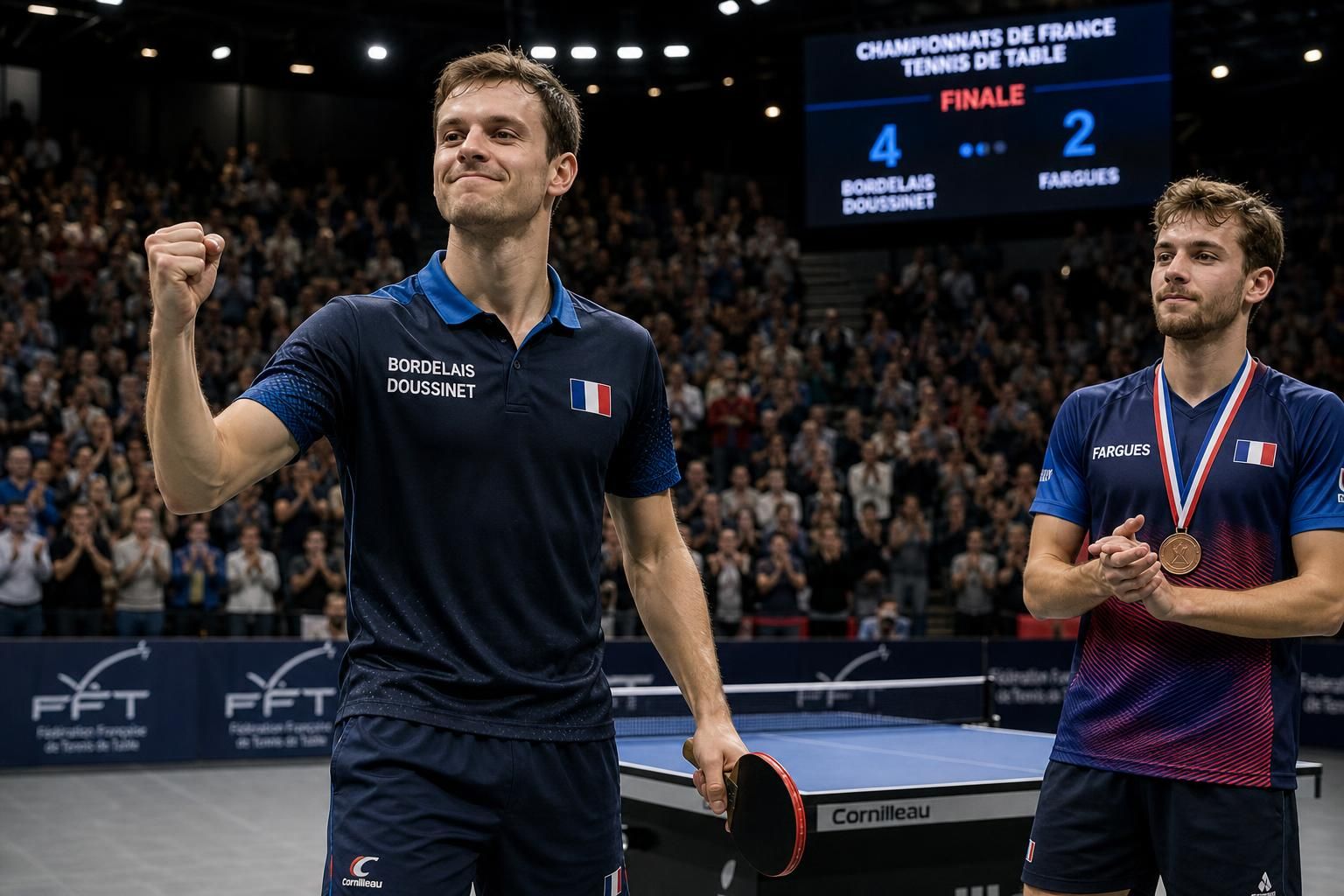
At the French Table Tennis Championships this year, unexpected drama unfolded as Nathan Doussinet from Bordeaux clinched the coveted national title, defying the odds as the sixth seed. His journey was nothing short of spectacular, marked by nerve-wracking victories and commanding performances that set him apart from the usual favorites. Meanwhile, in the juniors’ circuit, Valentin Fargues made headlines by securing a bronze medal despite being an underdog ranked 29th, showcasing the depth of talent brewing in French table tennis.
These championships not only crowned a new champion but also illuminated the rising stars set to shape the future of the sport in France. The tournament, held amidst a fiercely competitive atmosphere, was a testament to the evolving landscape of French table tennis, where emerging talents disrupt traditional hierarchies and redefine expectations.
Unforeseen Triumph: Bordelais Doussinet’s Path to Victory at the French Table Tennis Championships
Starting as the sixth seed, Nathan Doussinet did not carry the weight of favorite expectations, yet his performance quickly silenced any doubt. He showcased remarkable control and a tactical edge by dispatching contenders Alexandre Fosse and Sandro Cavaille with ease. The quarterfinals presented his most formidable challenge in Nathan Pillard, the number two seed. Their match was a gripping spectacle of resilience and skill, stretching to a full seven sets, with Doussinet seizing victory at 4-3. This encounter emphasized the psychological toughness and technical finesse necessary to excel in high-stakes table tennis tournaments.
The semifinal against Thomas Laroche was a display of dominance, with Doussinet securing a 4-1 win, followed by a similarly assured final where he defeated Evan Leriche 4-1 to claim the title. His coronation cements his place among France’s elite juniors, having previously contended in the 2024 final but falling short to Flavien Coton. This victory signals a notable shift in the junior ranks and marks Doussinet as a player to watch in the upcoming seasons.
Emerging Talents from Bordeaux: Fargues and Mroz’s Fight for Podium Positions
While Doussinet’s story captured the limelight in the senior categories, the championships also highlighted promising youth talent from the CAM Bordeaux club. Valentin Fargues, entering the competition ranked 29th, stunned onlookers by capturing the bronze medal in the benjamins category. His early upset over the eventual champion underscored the unpredictable nature of the tournament and the rising standards among younger players.
In the cadets division, Raphaël Mroz and his doubles partner Liam Bouchoir impressed by reaching the semifinals before succumbing to the future champions, earning their own bronze accolades. These impressive performances are credited to the expert guidance of coaches Thomas and Paul Lavergne, whose high-level expertise has become synonymous with cultivating young French table tennis stars, bringing a fresh wave of competitiveness from Bordeaux.
Significance of the 2026 French Table Tennis Championships in the National Sports Landscape
The 2026 edition of the French Table Tennis Championships, set in Levallois, stands as a milestone in the broader context of French sports. The tournament reaffirms France’s commitment to nurturing domestic talent while maintaining high-caliber competition. Notably, the results shake up the national rankings and provide momentum for players like Doussinet and Fargues, who are now poised for higher challenges on European circuits.
This event also resonates beyond table tennis itself, embodying the vibrancy and potential of French sport at large. The rise of less heralded players underscores the dynamic nature of sports development, where investment in youth training and strategic club management pay tangible dividends on the national stage. The involvement of expert coaches and the structured support from clubs such as CAM Bordeaux reflect a paradigm worth following and documenting closely, much like the extended narratives observed in tennis, which highlight the meticulous progression of athletes through ranks like that of the Lebrun brothers.
For keen enthusiasts tracking emerging stars or the general evolution of French sport, following such tournaments is essential. The blend of unexpected victories, rising talents, and comprehensive coaching strategies offers a nuanced glimpse into the future. Events like these build a rich tapestry of stories that will be retold in national sports chronicles and inspire a fresh generation of athletes and fans alike.
The French Table Tennis Championships thus remain not just a contest of skill but a barometer for the nation’s sporting health and its eagerness to produce champions capable of excelling on the international stage. For deeper insights into the spirit and performances witnessed this season, the table tennis showdown remains a pivotal reference point for aficionados and analysts alike.