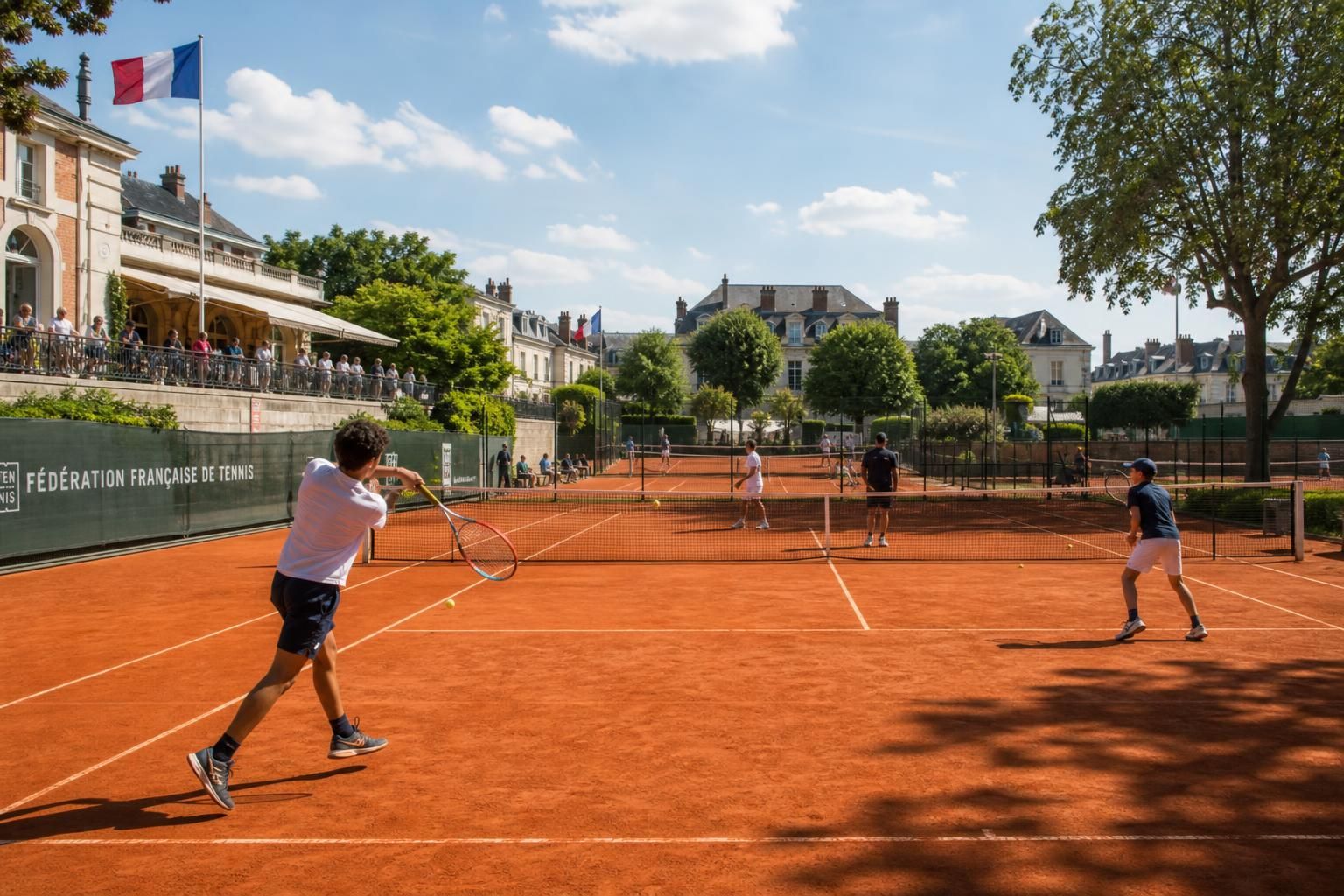
The French Tennis Federation is making a bold strategic move to reenergize tennis all across France by focusing on one of its most cherished traditions: clay courts. As the sport faces a dip in grassroots enthusiasm and a shift in playing surfaces, the Federation’s initiative aims to revitalize national tennis with a sweeping plan to double the number of clay courts by 2032. This effort is not simply about infrastructure—it’s a clear signal that the Federation seeks to preserve the unique character of French tennis and reassert its identity on the world stage, especially with the iconic French Open looming large in the international tennis calendar.
The decision emerges at a crucial juncture. With nearly 300 players, including 30 French hopefuls, competing in the Roland-Garros qualifiers this May, the depth of talent striving to make a mark on clay is undeniable. The success stories of Arthur Fils and Loïs Boisson—rising stars who both began their French Open journeys in the qualifiers—illustrate the rewarding but challenging pathway the clay circuit still commands. Beyond nurturing individual talent, the Federation plans to significantly expand youth competitions on clay surfaces, recognizing the impact that early specialized training can have on player development and long-term competitiveness.
There’s also a commercial logic underpinning this push. Clay courts, with their unique playing style and character, offer a distinct tennis experience attracting spectators and sponsors, creating healthier enthusiasm at the club level and fueling the sport’s economic viability. The Federation’s ambition echoes beyond the red dirt of Paris, expecting this momentum to cascade through tennis clubs across France’s national tennis infrastructure. But the road ahead demands not only meticulous court maintenance but also a rethinking of how training programs and competition calendars harmonize with this surface resurgence.
The French Federation’s Tennis Infrastructure Renovation: A Deep Dive into Clay Maintenance and Expansion
Maintaining clay courts is notoriously demanding compared with hard or grass courts. The Federation’s commitment to overhaul nearly 13,000 concrete porous courts by turning them into artificial clay surfaces signals a profound investment in court maintenance and player training. This change aims to combine the authenticity of clay with improved durability to sustain high-quality play while reducing upkeep. Such innovation may bridge the gap that long deterred clubs from investing in traditional red clay. As a result, players will benefit from consistent, top-tier training environments essential for mastering the unpredictable bounce and slower pace clay offers—a style integral to French tennis culture.
By setting the target to double clay courts within a single decade, the French Federation acknowledges the surface as an indispensable tool both for developing homegrown talent and attracting international attention. This drive enhances the national tennis scene’s appeal and positions France strategically in a global landscape where hard courts have gained overwhelming dominance. The effects of this plan will be felt especially in youth circuits, as the number of clay-court competitions is set to rise significantly—offering boys and girls expanded opportunities to engage with a style that fosters endurance, tactical awareness, and resilience.
Elevating Player Performance through Clay at Major Events and Daily Training
Clay courts demand an astonishing blend of patience, agility, and tactical skill. The French Federation’s push to reinforce clay-court tennis isn’t just infrastructure-focused—it’s about refining how players approach the sport. Notably, domestic stars like Arthur Fils have showcased the potential that a clay-centered approach can unlock. His progression from qualifiers in 2021 to becoming France’s top-ranked player by 2026 reflects how immersion on clay nurtures competitive excellence. Similarly, Loïs Boisson’s heroic semifinal run at Roland-Garros underscores the inspirational power of clay-court competition to forge national tennis leaders.
Parallel to individual success stories, the Federation is channeling resources toward tennis clubs and coaching—aiming to integrate clay training methodologies within everyday practice. This intent directly influences player development pipelines, as adapting strategies to the slower and more physically demanding nature of clay matches enhances all-around versatility. It’s about embedding a uniquely French tennis identity that remains relevant even as global trends favor faster surfaces.
National Tennis Revitalization through Expanded Competitions and Culture
The Federation’s blueprint doesn’t stop at courts and training; it nurtures a broader cultural resurgence by intensifying the clay-court competition calendar, particularly for youth. The number of tournaments on clay is set to near double, with a clear emphasis on gender equity: 17 tournaments for girls and 16 for boys, up from nine each previously. This expansion underlines a strategic effort to create more competitive opportunities that also serve as talent incubators.
Beyond nurturing champions, these events rebuild community interest and encourage participation at all levels. The distinct unpredictability of clay tennis—where weather and surface conditions can turn matches into strategic chess games with the ball—offers a spectacle that reengages fans and players alike. Paris, with Roland-Garros as its flagship venue, continues to be the heartbeat of this movement. Its global resonance justifies the Federation’s concerted focus on strengthening sports development and honoring the game’s legacy.
This holistic reorientation towards clay courts isn’t merely nostalgic—it’s a calculated response to changing dynamics in professional and recreational tennis. While global tennis has embraced faster surfaces for various logistical reasons, the French Federation stakes its future on preserving and enlarging a space where strategy and endurance reign supreme. This resurgence might well be a blueprint for other national tennis bodies seeking to blend tradition, player development, and commercial growth sustainably.
The recent trajectories of emerging French players, the decisive Federation investments in clay court competitions, and the scaling up of youth tournaments collectively suggest a renewed vigor moving through the national tennis scene. If these efforts succeed, France could soon reclaim its role as a global clay-court powerhouse, refreshing the sport’s cultural and competitive landscape. The clay courts aren’t just a surface; they’re a statement of intent for the future of French tennis.