As the 2026 FIFA World Cup approaches, the way teams are ranked and progress through the tournament has undergone a significant transformation that promises to reshape the spectacle from the group stage all the way to the final. Gone are the days when top teams might face off too early; the new format champions competitive balance and narrative buildup, with a tennis-style knockout bracket ensuring the world’s best don’t clash until the last stages. Hosted jointly by the United States, Canada, and Mexico, this will be the biggest World Cup ever, boasting 48 teams instead of 32, which brings fresh challenges and opportunities in qualification, standings, and group dynamics. These changes impact everything — from seeding to tie-breakers, from scheduling to where giant clashes happen. Understanding how the standings work now is critical for following the journey of favorites and underdogs alike.
Quick Highlights 🔥:
- 🌍 The World Cup expands to 48 teams, grouped into twelve groups of four, mixing seeding and geopolitical rules for balanced competition.
- 🎾 FIFA’s new tennis-style knockout format separates the top four ranked teams so they can only meet from the semifinals onward.
- ⚽ Host nations (USA, Canada, Mexico) are granted automatic Pot 1 seeding with fixed group positions, ensuring home advantage during group matches.
- 🔢 Teams are seeded in four pots based on FIFA rankings, with confederation rules blocking teams from the same region (except up to two UEFA teams) from sharing groups.
- 📊 Qualification from group stage involves top two finishers plus the best eight third-place teams advancing to a complex Round of 32 knockout setup.
How the New World Cup Standings and Rankings Work
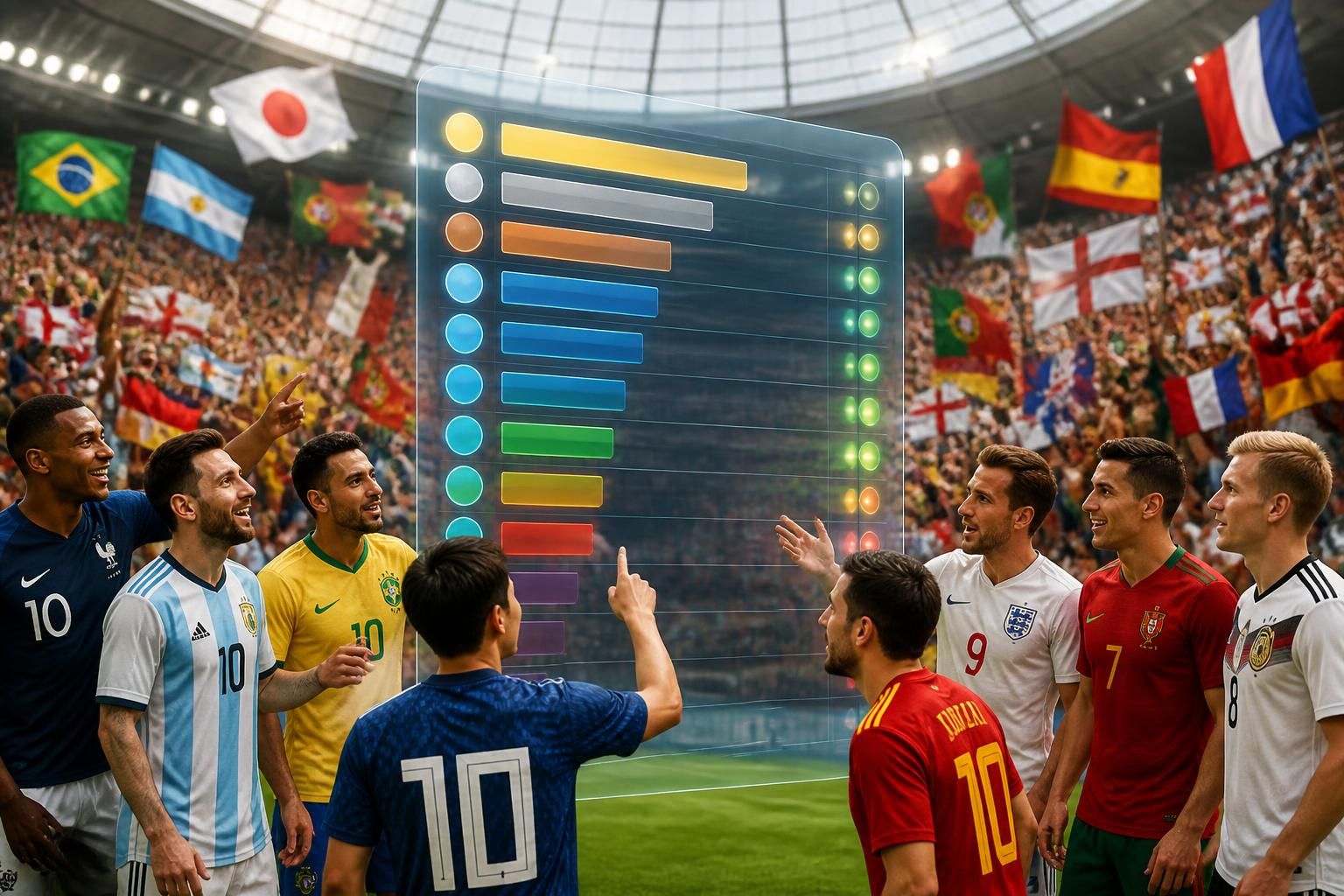
When it comes to the World Cup standings, the combination of more teams and a revamped structure demands a clearer understanding of rankings, points, and progression mechanisms. Teams are divided into four pots of twelve based on their FIFA rankings, with Pot 1 notably hosting the three co-host nations — the USA, Canada, and Mexico — alongside the nine highest-ranked teams worldwide. No surprise here: football powerhouses like Spain, Argentina, France, and England lead this elite group, benefitting from seeding that strategically spaces them out to avoid early meetings.
This seeding matrix doesn’t just impact the group stage; it reverberates through the entire tournament. Each group picks one team per pot, balancing competitive diversity and geographic variety. Restrictions ensure, for example, that no CONCACAF team (other than hosts) shares a group with the USA, Mexico, or Canada. UEFA gets a special exception allowing up to two European teams per group, reflecting the confederation’s size.
Points gained during this phase follow the standard football rules: three points for a win, one for a draw, zero for a loss. But what truly matters are tie-breakers — goal difference, head-to-head records — that fine-tune rankings within groups. These nuanced metrics can determine if a team advances outright, or if it faces the pressure of being among the best third-placed teams in pursuit of qualification.
The Tennis-Style Knockout Bracket: A Gamechanger for Matchups
The 2026 World Cup introduces a novel “tennis-style” bracket for knockout stages, a strategy modeled after Grand Slam tournaments. This system guarantees that the world’s top teams won’t face off prematurely. Spain and Argentina, the global top two, are placed on opposite halves of the bracket, while France and England receive similar treatment. This carefully calibrated architecture means these heavyweights can only meet in the semifinals at the earliest — a huge shift from prior tournaments.
Previously, luck of the draw often resulted in top teams being eliminated by rivals early on, diluting the excitement of the final rounds. Now, we can anticipate preserved suspense and carefully spaced opportunities for marquee clashes, raising the stakes substantially as the tournament progresses. While the exact semifinal pairings aren’t fixed, this format affords a degree of predictability and strategic planning rare in football tournaments, as the bracket’s 32 teams break down not just by group winners and runners-up but also include the best third-place finishers.
Group Stage Draw Mechanics and Confederation Restrictions
Behind the scenes, the draw process is a mathematical and geopolitical puzzle. Each of the twelve groups (A through L) is assembled one team at a time from the four pots, keeping confederation conflicts in check and maximizing diversity. The hosts’ guaranteed Pot 1 spots in predetermined positions reflect a logistical need: their matches must take place on home soil, at iconic venues like Mexico’s Estadio Azteca, Toronto’s BMO Field, and the United States’ Los Angeles Stadium.
The draw’s meticulous planning also reflects in who can and cannot be grouped together. For example, Panama from Pot 3 can’t land in a group with any host nation from CONCACAF to avoid overly stacked groups. This thoughtful balancing act matters when watching the World Cup standings evolve; knowing the composition of groups helps foresee who battles for those crucial points, qualification spots, and ultimately the road to a potential final.
Under the Microscope: What These Changes Mean for Teams and Fans
The changes to how teams are ranked and advance bring a double-edged sword. Favorites like Spain, Argentina, France, and England carry expectations to win their groups and navigate their respective knockout pathways. For many mid-tier nations placed in Pot 2 or Pot 3, the challenge intensifies; they face tough opposition both in group matches and later rounds.
However, this system diminishes wild upsets by ensuring elite teams are less likely to crash out early — which might disappoint thrill-seeking neutrals hoping for giant-killer tales. Meanwhile, underdogs from Pot 4 and playoff qualifiers must overcome steeper odds, often meeting top seeds early, reflected in ongoing analyses such as predictions on World Cup 2026 qualifiers and specific matchups like Uzbekistan versus Colombia.
Ultimately, these systemic overhauls spotlight not only on-field prowess but also on effective preparation, logistics, and strategy. The 2026 World Cup will test teams’ consistency in a competition larger and more complex than ever before, redefining how points, goal difference, and tie-breakers matter in a shifting football landscape.