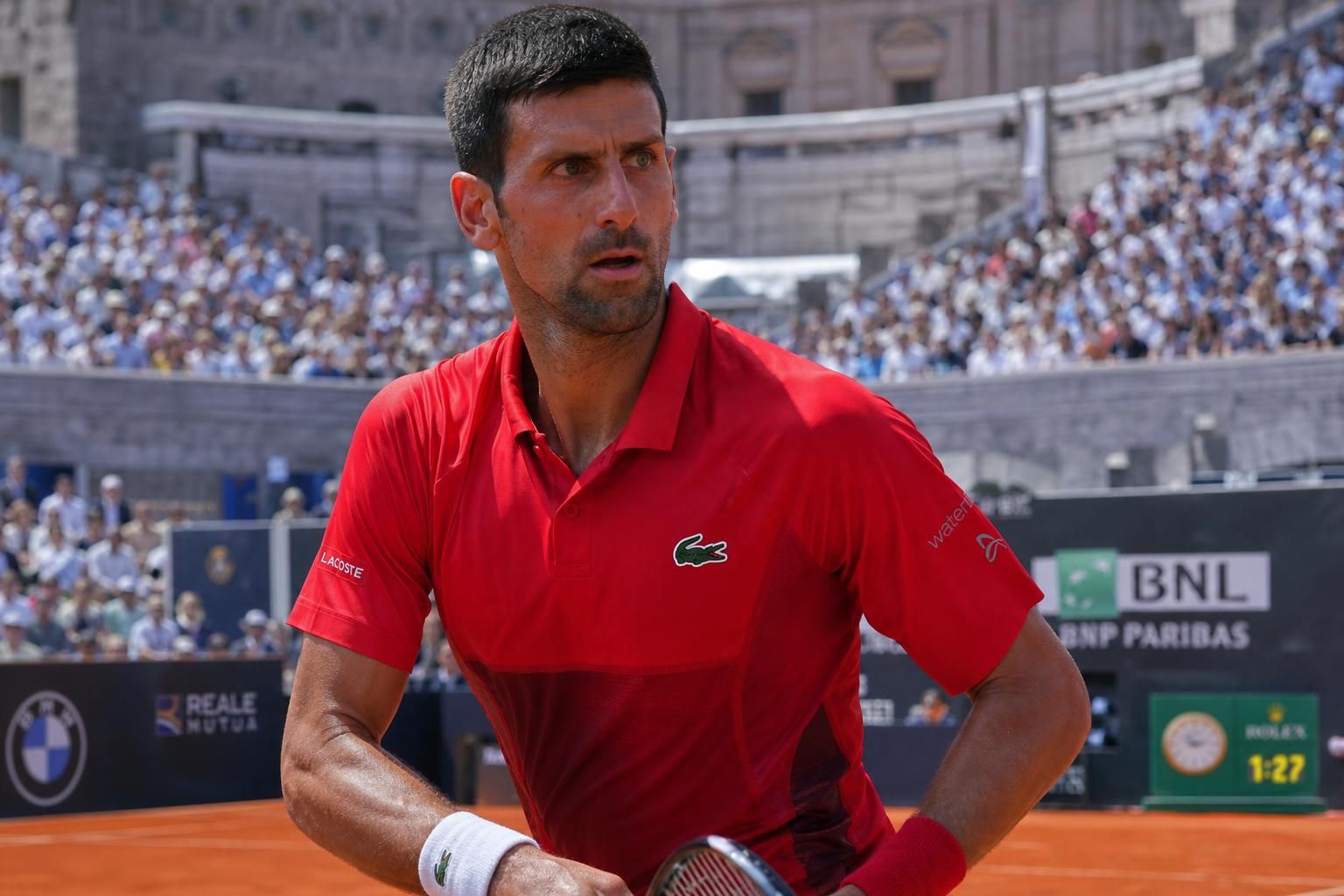
Novak Djokovic’s comeback at the Rome Masters 1000 🔥 has been anything but smooth, marking a questionable return after a two-month break due to a right shoulder injury. Despite starting the match with a dominant 6-2 first set against the 79th-ranked Croatian Dino Prizmic, Djokovic’s performance sharply declined. His abrupt loss (2-6, 6-2, 6-4) raises serious concerns with Roland-Garros just weeks away. The physical toll on the 38-year-old Serb was undeniable, seen in his faltering movement and a rare struggle to stay competitive — a reminder that even legends like Djokovic face harsh new realities on the ATP circuit.
In an unforgiving tournament atmosphere where fans at Foro Italico cherish him as much as local favorite Jannik Sinner, Djokovic’s vulnerability was on full display, overshadowing what was supposed to be a straightforward tune-up. This unexpected early exit also highlights the deepening level of competition. Prizmic’s victory against a top 5 player, an impressive milestone for the young qualifier, reflects the shifting dynamics within the sport.
As the tennis world watches closely, Djokovic acknowledges the difficulties of performing at his best when battling physical limitations and doubts whether he’ll be able to push through for another Grand Slam win this year. The Rome experience seems to signal a tougher road ahead rather than a triumphant return.
- 🎾 First ATP competition for Djokovic since March ended in a surprising defeat
- ⚠️ Physical struggles apparent throughout the match, especially in the second set
- 🔥 Young Croatian Dino Prizmic delivers a career-defining win over a tennis legend
- ⏳ Concerns rise over Djokovic’s preparation ahead of the 2026 Roland-Garros
- 🎯 The match illustrates challenges top players encounter when returning from injury
Djokovic’s Rome Setback: A Stark Reminder of a Challenging Comeback in Tennis
Novak Djokovic entered the Foro Italico aiming to ease back into competitive tennis after his right shoulder injury sidelined him since early March. Holding six prior Rome titles, expectations were that the Serbian star would glide through early rounds with his signature precision. Instead, his encounter with Dino Prizmic became a case study in unforeseen physical decline and match momentum loss.
The first set showcased a glimpse of Djokovic at his peak—with aggressive play, surgical shot placement, and dominant court coverage that allowed him to claim it in just 40 minutes. Yet, immediately after that, Djokovic’s game unraveled. He struggled to maintain focus and stamina, visibly wincing and bending over in pain after points. This disjointed performance allowed Prizmic, the 20-year-old qualifier ranked 79th, to exploit the opening, shifting the match’s balance and ultimately sealing Djokovic’s first opening-round defeat in Rome across 19 attempts.
The Physical Toll and Tactical Challenges in Djokovic’s Mid-Match Fade
The second set was a humbling spectacle; Djokovic scored only five points across the first four games, while facing multiple break threats—a rarity for a player known for his resilience. His physical struggles suggested that lingering injury issues were hindering his usual fluid movement and baseline control. Although Djokovic tried to recover confidence during the third set, Prizmic maintained pressure with aggressive serves and precise groundstrokes, closing out the match with an ace that left the crowd stunned.
This match underlines a broader concern in the tennis world: comeback journeys are anything but linear. Even seasoned players like Djokovic become susceptible to the brutal demands of ATP competition when battling through injury setbacks. The victory boosts Prizmic’s profile dramatically, setting up a next-round showdown with French player Ugo Humbert, himself an in-form Top 40 talent.
What This Match Means for Djokovic’s 2026 Season and the ATP Landscape
Djokovic’s candid post-match reflections revealed an acceptance of his “new reality,” where physical ailments have become an ongoing hurdle. He confirmed no additional tournaments before heading to Paris, signaling a focus on recovery over immediate competition. While his ambition to clinch a record-equaling 25th Grand Slam at Roland-Garros remains intact, this Rome performance dampens optimism about his condition and readiness.
Furthermore, the ATP circuit is witnessing a power shift: veterans like Djokovic face younger, fearless competitors keen to claim spotlight moments—visible not only in Prizmic’s upset but also in other results at Rome where top 10 stalwarts like Alex De Minaur suffered early exits against lower-ranked, hungry opponents.
For fans wanting more tennis insights tied to current ATP movements and player dynamics, the story aligns with ongoing narratives about the sport’s evolving challenge: maintaining peak performance amidst fierce competition and physical wear. Check out related coverage such as the latest reports from Monte Carlo in the ATP tour for broader context on how player comebacks impact rankings and sports momentum.
As the tennis season progresses, moments like Djokovic’s tough return in Rome remind us that even icons face uphill battles. Monitoring these tournaments closely offers fans a front-row seat to unfolding sports drama where emerging talents challenge established figures, crafting a dynamic and unpredictable ATP landscape.