
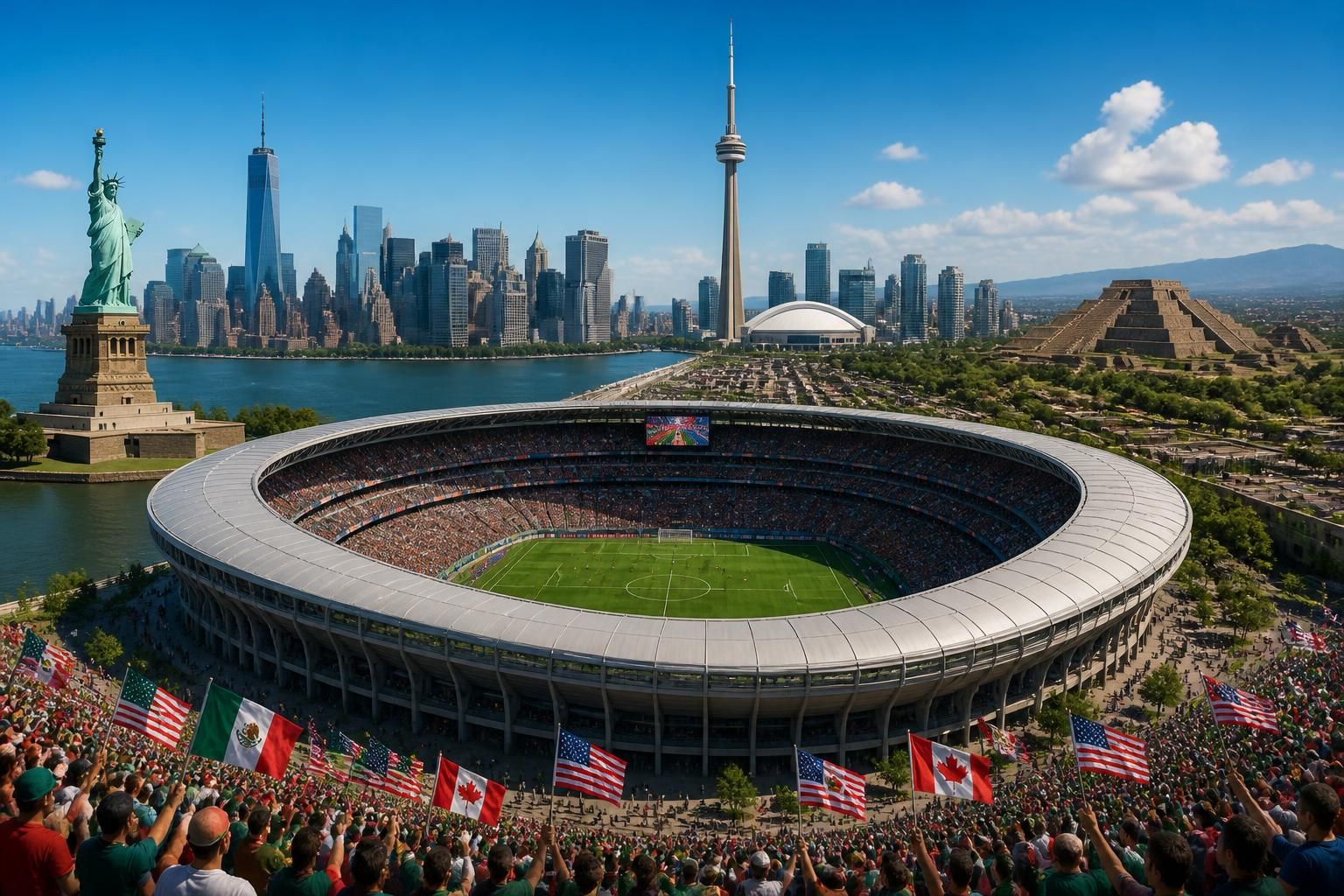
As the excitement builds toward the World Cup 2026, all eyes are on the unprecedented triple-host collaboration among Canada, Mexico, and the United States. This football tournament promises to be the largest in history with 48 teams competing across 16 cities, stretching from coast to coast in this vast North American stage. While the scale offers opportunities for unparalleled festival atmospheres and a celebration of international football, it also raises questions about logistics, fair play, and the essence of the World Cup itself.
The preparations underway in the three host countries involve extensive renovations and upgrades, particularly in stadium venues. From Mexico City’s iconic Estadio Azteca, which will host the tournament’s opening match, to the ultra-modern AT&T Stadium in Dallas, which boasts the largest seating capacity, organizers are balancing tradition with innovation. However, the massive increase from 32 to 48 teams has sparked debates about diluting the competition’s quality and the challenges posed by the expanded format, including a prolonged schedule of 104 matches over 39 days. Fan enthusiasm meets the complexity of travel demands and climate concerns, as some venues may face harsh summer heat, compelling FIFA to mandate hydration breaks.
On the sporting front, the tournament mix is electrifying. With automatic qualifications for the three co-hosts and the introduction of debutant nations like Cape Verde and Curaçao, the 2026 FIFA World Cup will showcase a fascinating blend of seasoned powerhouses and fresh contenders. Yet, controversies surrounding political tensions and immigration policies, especially in the United States, have introduced potential hurdles, amplifying the stakes beyond the pitch. This soccer event, therefore, is not just a tournament but also a vast stage reflecting the interconnectedness—and cracks—of today’s global sports and politics.
- 🌍 Record-breaking 48 teams and 104 matches hosted across 16 cities in three countries
- 🏟 Key venues: Estadio Azteca (Mexico City) opens the tournament; MetLife Stadium (New Jersey) hosts the final
- ⚽ New tournament format with 12 groups of 4, introducing more knockout stage spots
- 🛠 Extensive infrastructure upgrades and logistical challenges
- 🧊 Concerns over extreme heat and scheduling adjustments to protect players
- 💥 Political tensions impacting team participation and fan access
- 🚀 Debut nations and returning teams creating exciting dynamics on the field
Massive Scale and Ambitious Tournament Format for World Cup 2026
This edition of the FIFA World Cup is rewriting the rules with an expansion that takes the number of competing nations from 32 to 48, marking the first such leap since 1998. These teams will be split into 12 groups of four, setting the stage for a longer tournament that spans nearly six weeks. The top two teams from each group along with the eight best third-placed teams will advance to a revamped round of 32, creating a wider knockout competition that pulsates with fresh tension every matchday.
The increase in matches from 64 to 104 inevitably demands that the host countries deliver on all fronts: stadiums must accommodate FIFA’s minimum capacity requirements, upgrades to pitch quality are non-negotiable, and broadcast-ready venues must meet high technical standards. Not every stadium is soccer-specific; many are adapted football or multi-purpose arenas, adding complexity to preparation. Vancouver’s BC Place and Toronto’s BMO Field in Canada have been tailored to soccer needs, while venues like SoFi Stadium in Los Angeles and Levi’s Stadium in the San Francisco Bay Area reflect the American penchant for modern, multi-use megastructures.
Host Cities and Their Unique Challenges
The vast geography covered by the three host countries also introduces unique logistical issues. Travel distances for teams and supporters are vast; crossing time zones and climates range from coastal to arid inland areas. FIFA has segmented host cities into three regional clusters: Western (Vancouver, Seattle, San Francisco, Los Angeles, Guadalajara), Central (Kansas City, Dallas, Houston, Atlanta, Monterrey, Mexico City), and Eastern (Toronto, Boston, New York/New Jersey, Philadelphia, Miami) to ease scheduling and mitigate fatigue.
Security preparations also come under scrutiny, with Mexico planning to deploy over 100,000 troops during the tournament owing to recent unrest in Jalisco, while in the US, city-level committees have absorbed much of the operational burden, sometimes creating friction over funding responsibilities. Furthermore, controversies such as the US’s tightened visa policies and travel bans have sparked discussions about how welcoming the World Cup 2026 will be for global fans. Immigrant communities, in particular, are watching closely, as these policies particularly affect supporters of qualifying nations from excluded countries.
Spotlight on Teams: Favorites, Debutants, and Shocks
The expanded tournament garners attention not only for size but for the mix of teams that it offers. Classic powerhouses like Argentina, the defending champions, and perennial European contenders are expected to dominate the headlines but keeping an eye on newcomers such as Cape Verde and Curaçao adds compelling narratives. The stakes are higher as more nations fight to advance beyond group stages, and the increased number of matches means there will be plenty of unexpected storylines unfolding.
Qualification dynamics also shifted, with automatic slots for host countries sparking debates over fairness and competitive balance. The increased allocation for CONCACAF reflects in the tournament lineup, but questions remain about the dilution of competition quality and whether the historical prestige of the World Cup might be compromised for quantity over quality.
Infrastructure: Delivering Stadiums and Fan Experiences
The infrastructure race is in full swing. Stadiums such as Estadio Azteca are undergoing major renovations to meet the demands for the opening match, while others like AT&T Stadium in Dallas stand ready to host the most matches, including one of the semifinals. The requirement to produce natural grass pitches in many primarily football or multi-use venues has pushed organizers into ambitious turf replacement projects.
Additionally, FIFA’s push for sustainability and fan comfort is testing host cities’ commitment to modern, accessible facilities. Beyond match day, fan festivals, broadcasting infrastructure, and city-level transport solutions are being prioritized to deliver a smooth experience for the expected global audiences. Media hubs such as Dallas’s Kay Bailey Hutchison Convention Center underscore the technical demands on host nations to broadcast the world’s most watched soccer event.
Emerging Concerns and Lingering Controversies
The World Cup 2026 is also a focal point for debates over climate impacts, human rights, and the intersection of politics and sport. The intensive travel between far-flung locations contributes to a significant carbon footprint, stirring unease among environmental advocates. The climate risks in host cities, particularly with heat levels surpassing those experienced in Qatar during the 2022 tournament, have pushed a rethinking of kickoff times and player welfare measures.
Issues surrounding the awarding of the tournament among three countries have garnered scrutiny as well. While this co-hosting model breaks new ground in unity, it adds layers of complexity in coordination among national and local authorities responsible for security, infrastructure, and operational logistics.
For fans eager to secure tickets and experience the tournament live, dynamic pricing and soaring costs, particularly in the United States venues, have sparked backlash and cast shadows over the true spirit of accessibility traditionally associated with the World Cup. Enthusiasts looking for comprehensive analysis and predictions on squad potentials and tournament outcomes might want to explore deep dives, such as the World Cup 2026 predictions and expert insights.